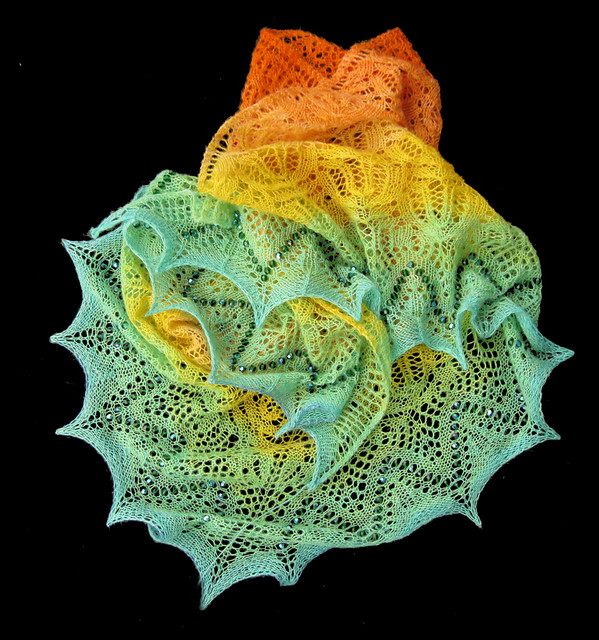
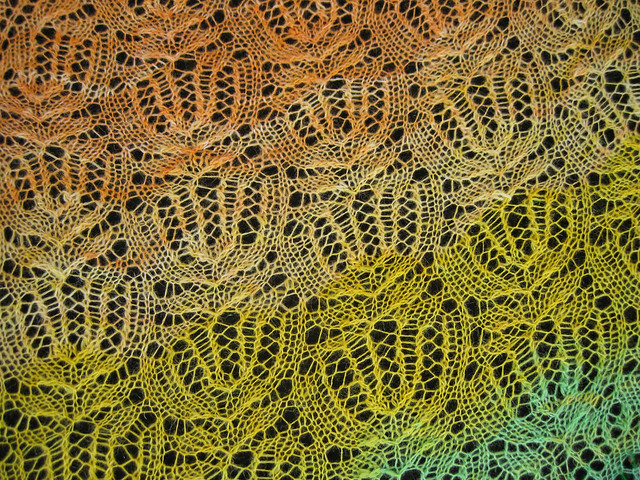
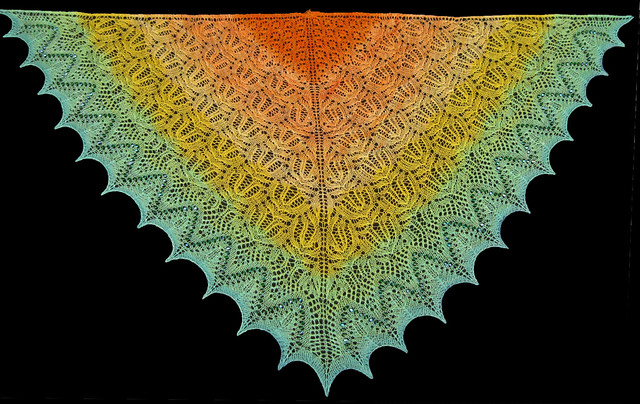
I received a huge pile of lovely batts for my birthday, custom-blended by the incomparable Ever Improving Me. I admit to having been lazy--I didn't photograph them. But I've spent a lot of time spinning them, and one of the batts just seemed perfect for Percy. The pattern is, unbelievably, free, and a fantastic knit--interesting, non-repetitive, and adapts easily to any length.
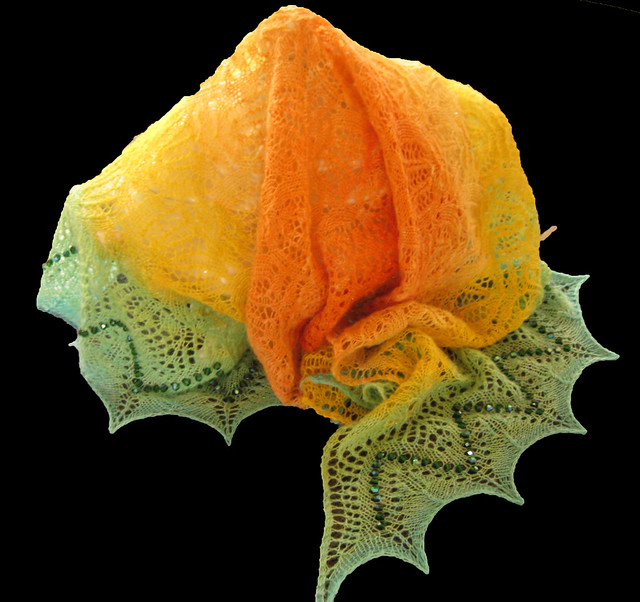
I wanted the top of the shawl to be a bit darker in tone than the rest, so I snitched some orange fiber from another one of EIP's birthday batts and spun it up first. The yarn, a two-ply spun on Tibetan spindles, is merino with lots of lovely, sparkly angelina and firestar, which makes the shawl twinkle happily.
No matter how it's wrinkled and folded, it looks lovely:
The top portion of the shawl is a little cat's paw design. You can repeat this motif as long as you like.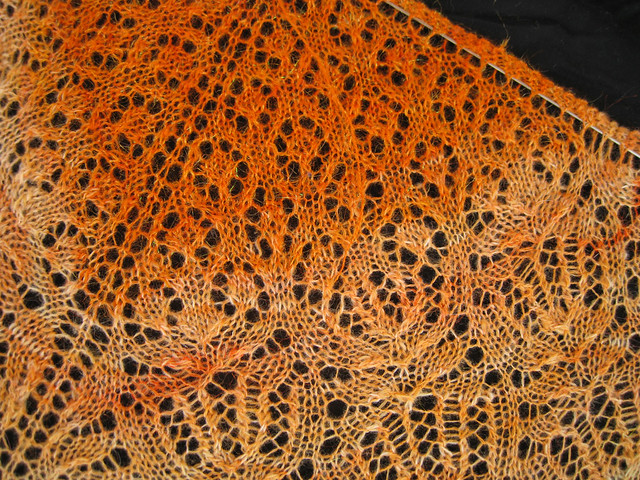
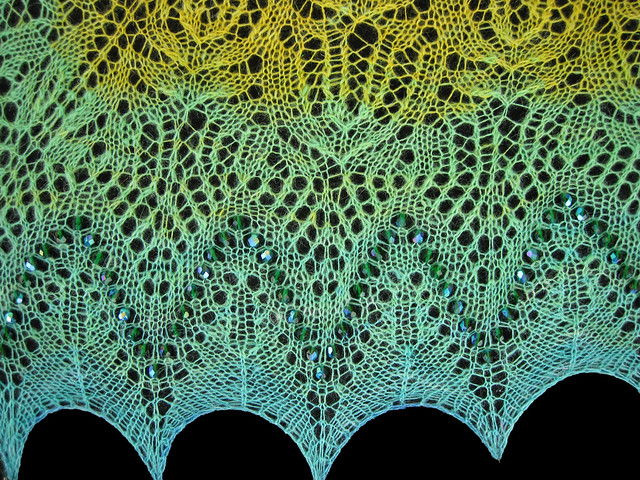
Alas, I didn't have enough yarn to work the border nupps, so I ordered some 6mm faceted round, glittery Czech glass beads and used them in place of the nupps...
Note to Self: When calculating the required number of beads on one-half of a symmetrical shawl, don't forget to multiply by two, or you will have to sit around for another ten days waiting for the rest of the beads to arrive.
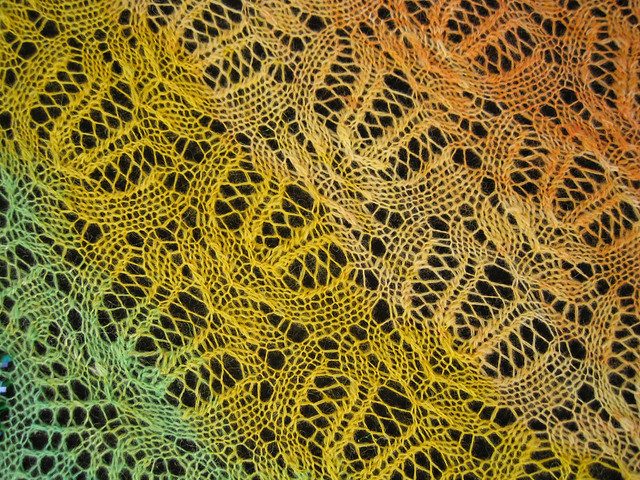
The yarn was one continuous strand--I didn't have to break the yarn to make the colors work. I just kept knitting the Frost Flowers pattern until I was into the greens and then proceeded on to the border. I did stop the Frost Flowers pattern in the middle of a repeat and just decreased away the extra stitches.
I fully intend to knit this pattern again, making it a bit smaller next time for a little scarf that will tuck gracefully into a winter coat.
Sunday, March 6, 2011
Percy Shawl


Saturday, February 26, 2011
Counting Sheep
Although this is primarily a knitting blog, every so often I wander off into other, less fibery, topics. And today, I am going to editorialize a bit about citizenship--a subject that gets a fair amount of babble, but most people probably have no idea what being a US citizen really entails.
Yes, you can vote at a certain age. Yes, you can earn money and collect Social Security in some cases. Yup, you can serve in the Armed Forces if you wish. But there is one, single inviolate privilege that US citizenship confers, and I would be willing to bet that few of you can name it. But you will, of course, by the time you finish reading this post, and it may help you in dire circumstances at some point in your life.
I took a short international trip last week, which was unremarkable and not worth even mentioning, except for the part where I deplaned at a United States airport and queued up for immigration. For those US citizens who have never re-entered the country, suffice it to say that it invariably entails briefly standing on line, having your passport stamped, and then zipping off to another destination.
This time, however, when I disembarked, the immigration hall was filled with people--sitting, standing, lying down--hundreds and hundreds of people, waiting in eerie silence. The lines stretched out of the hall, around corners, and, for all I know, back into jetways, stairs, elevators, and rooftops.
No lines moved towards the dozen or so immigration booths. The only noticeable movement was the arrival of yet more deplaned passengers squeezing into a space that bore an uncanny resemblance to a gigantic Tokyo subway car at rush hour.
After a few minutes, I queried an airport supervisor as to the problem, and was told that the relevant immigration computers were down, nationwide, and had been in this sad state for about six hours. He had no idea when the network would come back online, and until that happened, the static occupants of the immigration hall would not be allowed to pass over the magic yellow line onto US soil.
Now, people who know me well would imagine that I would pull out a book and immerse myself in the written word until the situation resolved itself. But it seemed to me that this logjam was just plain wrong on many levels.
We pay the salaries of the people manning those booths. More importantly, we do have real, unassailable rights under the Constitution, although we have lately been giving them away with depressing regularity. The history of the United States rarely portrays the citizenry as a nation of sheep. But when I looked around, I could see a vast assembly of ovines, waiting immobile for orders from Governmental Shepherds.
After a few minutes of cogitation, I pulled out my blue US passport, waved it over my head, and opened my Big Mouth.
"Excuse me, but I am a citizen of the United States. Under no circumstances may I be forbidden entry to this country while I carry a valid passport. In fact, the US cannot turn any US citizen away, regardless of what might happen once that person touches US soil. This Blue Sucker (fleegle waves passport again) entitles me to cross that yellow line, no questions asked."
You could have heard an ant sneeze in the silence. The officers manning the immigration stations stared at me in astonishment--a two-legged sheep bleating constitutional truisms--something that these government workers had clearly never before encountered.
A minute passed. A supervisor finally climbed down from his chair and addressed the crowd:
"All people possessing Blue Suckers over here." He pointed to four of the booths.
And with that, everyone bearing a US Blue Sucker speedily proceeded through the booths, the immigration officers' stamps thumping away in triple time.
I doubt that I will ever again receive a round of applause from hundreds of exasperated passengers, complete with dozens of pats on the back, a few wolf whistles, and many, many smiles. The airport supervisor asked me if I was going to run for Congress. Someone else asked if I was in immigration attorney. Several people shook my hand.
On the down side, I suspect that citizens of other countries sporting Green, Red, and Purple Suckers are still milling about the hall, waiting for the IT geniuses in Washington to figure out who pulled what plug on which database.
So, in the words of Robert Frost:
Home is the place where, when you have to go there, they have to take you in.
I can't speak for other countries, but in the United States, the only perquisite of citizenship is that you must be admitted if you can show such proof. It might be that you are arrested the moment you step on US soil, but you may not be denied entry, no matter what.
The moral of this little story is that sometimes, you can confront Homeland Security, and sometimes you can actually win. Speak up. Know your rights. Welcome home.
Wednesday, February 16, 2011
Circular Honeycomb Brioche
Well, I was certainly pleasantly surprised by the response to my last blog. I figured about six people might want me to keep babbling about spinning, but there apparently are quite a few who enjoy the postings, so of course, I shall continue. As every blogger knows, feedback keeps us going. The last spinning post had four comments, so I figured that either (a) Harry was deleting posts just to be annoying or (b) everyone's head hit the keyboard in stupefaction when they saw Yet Another Spinning Post. Clearly, the answer is (c).
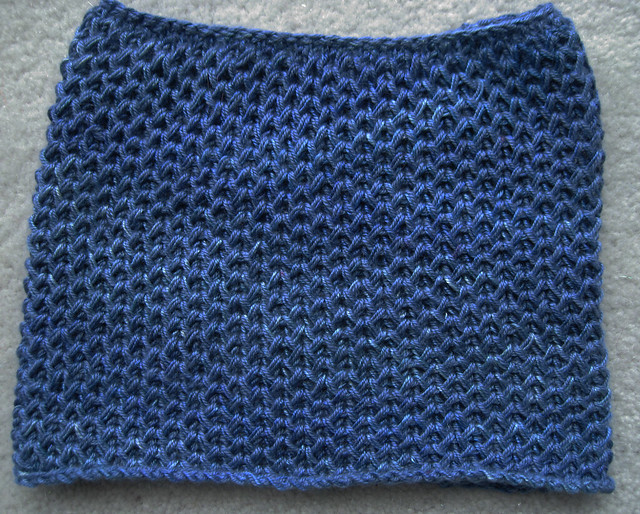
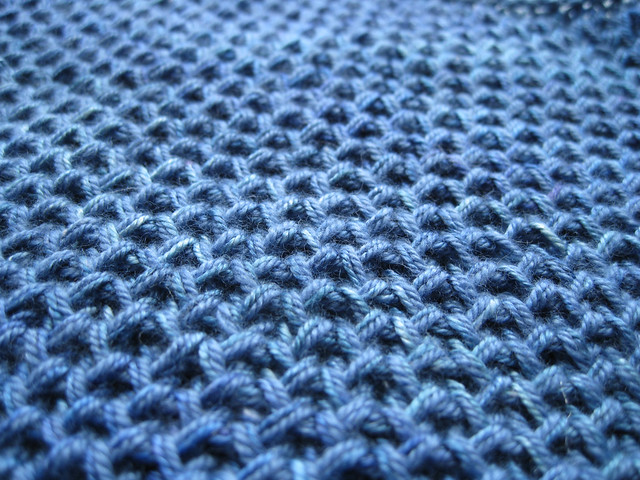
So, now that I have explained things to everyone's satisfaction, let me respond to several readers, who requested the secret to Circular Honeycomb Brioche. Here's the little neck warmer I made a using a strand of silk and a strand of cashmere:
The pattern is mildly tricky, but once you've run through one repeat, it's a no-brainer. Please swatch carefully, though. Brioche patterns are incredibly stretchy--you'll need a lot fewer stitches than you could possibly imagine.
Cast on an even number of stitches.
Row 1: Knit
Row 2: Purl
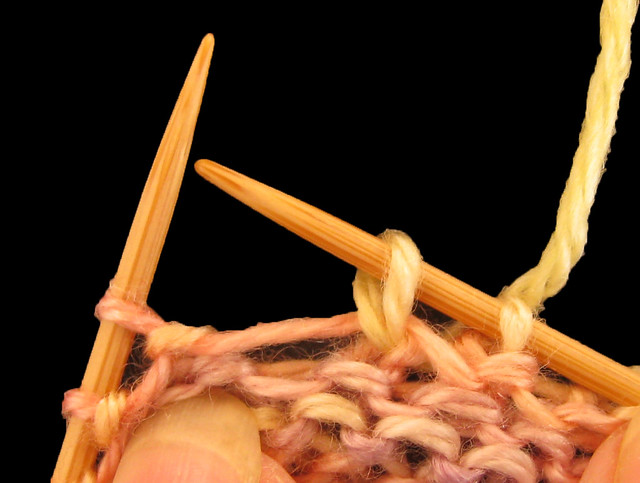
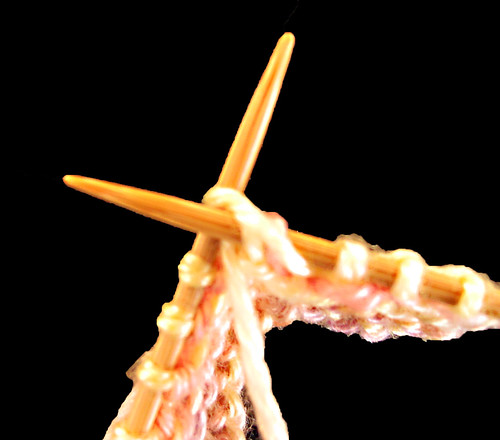
Row 3: K1, K1 below, that is, knit into the stitch of the previous row. Doing so unknits the stitch, so you will have the equivalent of a slipped stitch, thusly:
Row 4: P1, Purl the next stitch with the slipped thread of the previous row, as shown below.
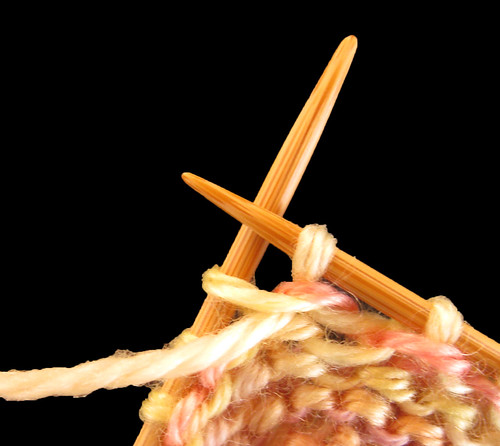
Row 5: K1 below, K1
Row 6: Purl the next stitch with the slipped thread of the previous row, P1
Repeat rows 3-6.
I realize that this pattern could be done by slipping stitches instead of knitting in the stitch below. Many Brioche stitches are written using slips instead of belows. Try it both ways and see which one you prefer.
Next time, Harry will post about his exciting goat-herding class that he took in Albania, followed by a slide show of his whirlwind tour of Krasnoarmeisk, Myshkin, Putchezh, Kholui, Urupinsk, Mariinsky Posad, Kirillov, Suzdal and Gus-Krustalnyi.
Here ends my 300th post, and I want to thank all my readers from the bottom of my heart for your support and comments. Harry doesn't have a heart, but he thanks you from the bottom of his purple iPod for electing him Ruler of the Known Universe. Did you guys really do that?
Wednesday, January 19, 2011
Where in the World is fleegle?
No, I was not suffocated by mountains and billows of the Queen Susan shawl, although it was a close call there for a few weeks. I've actually been quite busy, but just haven't had the urge to photograph anything. Fortunately, Hyperactive Harry got a new camera for Christmas, and condescended to take pictures for me. I winnowed out the dross, namely an extremely unflattering set of early-morning-before-coffee snapshots, and instead present you with the remainder.
First, I managed to slog through the Queen Susan border--all 165 miserable rows. By the time I was finished, I hated the pattern, loathed the yarn, detested the stitch markers, despised the needles, and abhorred the color. The instant I finished the last stitch, I zoomed into a closet, threw the huge hairnet inside, and slammed the door. At some point, I will have forgotten the tedious slog through the endless rows of repetition and optimistically resume on the edging, but in the meantime...
I've been busy spinning. All of the skeins shown below were spun on Tibetan supported spindles.
And some closeups...
After the Knitting gift rush was over, I took the incredible step of actually knitting warm things for myself. The first is a simple neck warmer in circular honeycomb brioche stitch. I wanted something very warm and soft, so used one strand of silk and one of cashmere. Fortunately, Harry wasn't around to see the first attempt. I forgot that brioche stitch is really very stretchy...and the result was more of a waist warmer. By eliminating 3/4 of the original stitches, I obtained something that actually fits my neck.
I always wanted a pair of hand-warmers, but always ended up giving them away. This pair is a keeper. Knit from a worsted-weight merino-silk, the pattern is my own invention. Too lazy to find a cable needle, I simply knitted three rows, then knitted the third, second, and first stitch on the left-hand needle to produce a cable-ish effect.
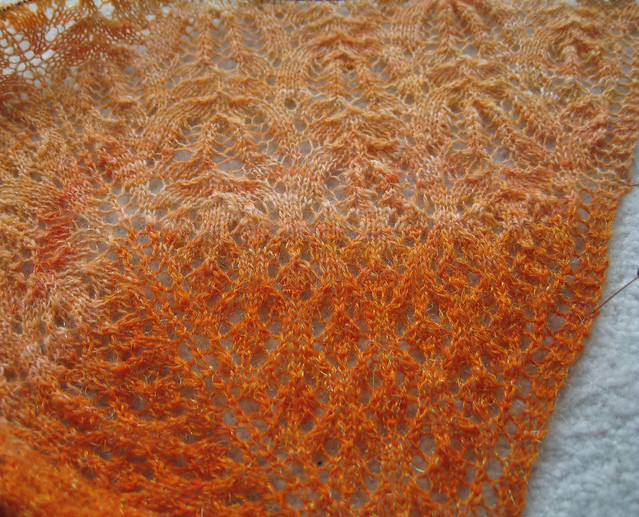
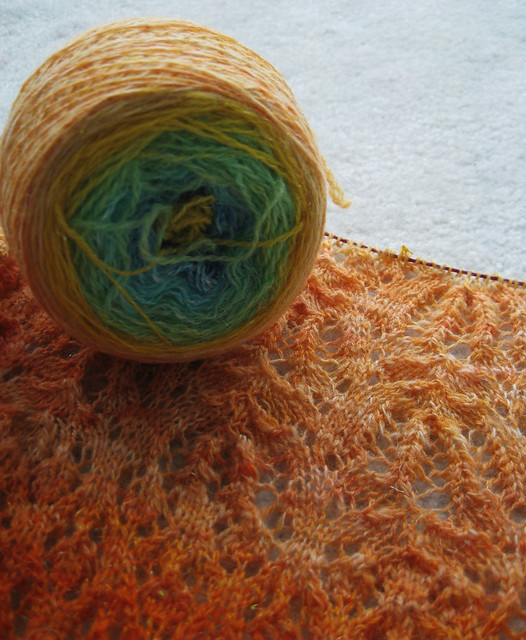
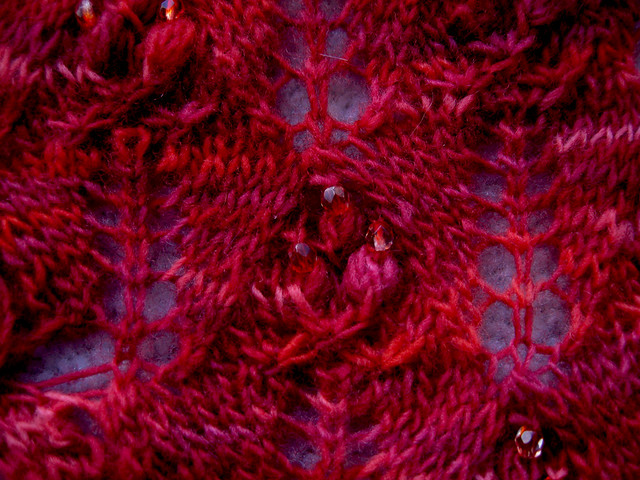
And I finally got around to casting on for two lovely shawlettes. Percy here is being knitted in my own gradient handspun:
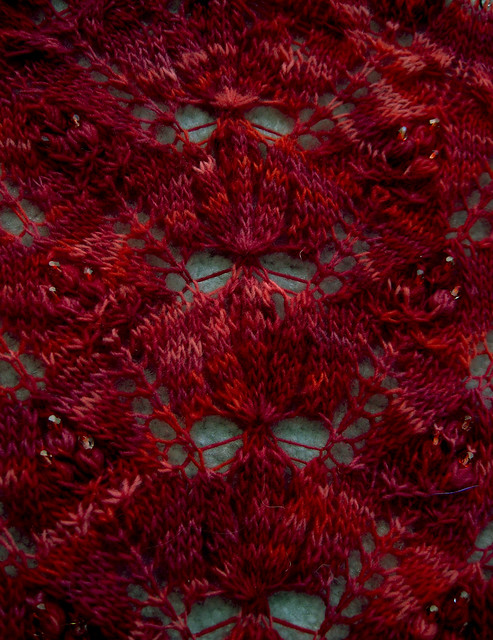
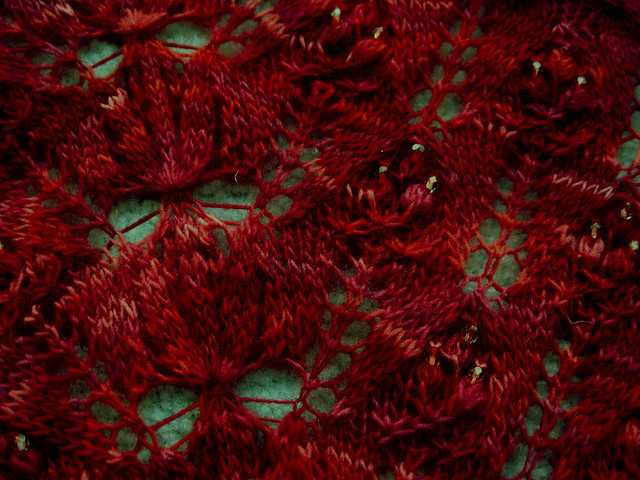
Krokus is being knitted with Malabrigo laceweight in the Amoroso colorway. The beads are 4mm bi-color faceted rounds.
Both patterns are freebies and lots of fun to knit--there's little repetition, so boredom cannot set in.
In other news, I decided to discontinue my spinning series--few of my readers seem interested, so I will forgo publishing the rest of the articles that apparently bored my readership into a stupor. Anybody still there?



Sunday, December 5, 2010
Spinning for Lace, Part 3: Fiber
After some high-powered nudging from an assortment of readers, I've finally gotten around to writing the third in a series of blog posts about spinning lace yarns.
Let's start by defining lace yarn so we know what we are talking about. Just as there's no standard sweater yarn, there's no standard lace yarn--you can knit lace out of hawser line if you have Really Large needles and a good-sized backyard. But conventionally, lace yarn is that which is finer than fingering weight--in the area of 10,000 meters per kilo--about 5,000 yards per pound. The finest handspun I've seen was made by beadlizard: 171,360 meters per kilo (85,000 yards per pound), useful to people with the eyes of a hawk, the patience of Mother Theresa, and the mindset of, well, words fail me.
Bear in mind that the thinnest yarn you can spin is comprised of three fibers. Yarns of this grist were used, three-plied, for Shetland lace.
There are some spinners on Ravelry who aspire to such wispy (and fragile) yarns, and several who have accomplished this impressive feat. I confess to have spent a week making about 100 meters of this stuff out of Optim merino, which was carefully plied on a charkha, wound off into a tiny ball, and reverently placed in a drawer so I can admire it periodically. I have no compelling drive to knit with it anytime soon. I estimate the plied yarn to be about 37,000 yards per pound--about a 150/2 grist.
I am frequently asked what sort of fiber is best for spinning fine lace yarns, and will answer the question this way: There's no Best Fiber, because the ability to spin fine grist is all about fiber preparation.
If the batt or roving is immaculate, my hands will be spinning away as I read a book. Perfectly prepared fiber draws so evenly that, with a bit of practice, you shouldn't have to do more than glance at it once in a while. Clearly, producing an even yarn is just a matter of rhythm. Your hands will be repeating the same steps over and over--draft out a length, twist, and wind on. If the fiber prep is flawless, the rest of you can be doing some thing else--a pleasant application of multi-tasking that's well worth mastering.
If the fiber is less than optimal, I will put it away and use it for another purpose. If there's one thing I have learned, it's that raw material will always dictate what it wants to be. And some of the batts and roving I have bought insist they want to be sock yarn. Or hat yarn. And in one sad unspinnable case, the only thing that fiber wanted to be was stuffing. And so it was.
Here is an example of a lovely, smooth batt eminently suitable for fine lace spinning (the dark pink dot is dye, not a fuzzball):


And here is one that is not:

The nepps (little wads of short fibers or snarls) are circled. You can, of course, hold the batt up the the light and daintily tweeze them out. Not being that energetic, I spun that particular batt (merino, silk, and angora) in a heavier weight yarn and thus avoided all the delicate plucking and concomitant mumbling, and whining.
It's often difficult to tell if a batt is really smooth by inspecting the prettily wrapped or folded fiber you see on the Internet. You can ask the artist to take a picture of the batt with light behind it--most sellers will be happy to show off their carding prowess.
Roving, because it's machine-made, tends to be more uniform than batts. However, if you are buying dyed roving, you need to make sure that the stuff wasn't felted or over-handled by the dyer. A good close-up picture will give you good idea of spinability, but no guarantee.
I almost never get lumps in my yarn, probably because I learned long draw, my preferred spinning technique, from a master spinner in New England 40 years ago. Lumps mean your fiber prep was not perfect and/or the twist is running into the fiber too quickly. You will also get lumps if your fiber is sticky. Some fibers are naturally sticky; others may have too much lanolin and just require a good wash to make them easily slip by each other. Adding silk to a fiber mix dilutes the natural tendency of wool fibers to cling to one another. But too much silk makes for a non-elastic yarn and I like my yarns to be springy.
Because I really hate it when people talk in generalities, I will give a few sources for superior fiber that work especially well with long-draw and supported spindling and have produced, for me, exceptionally wonderful lace yarn.
1. Dragonfly Fibers 65/35 merino silk top. Utterly flawless mixture that's a bit springy, a bit shiny, and altogether perfect for fine drafting.
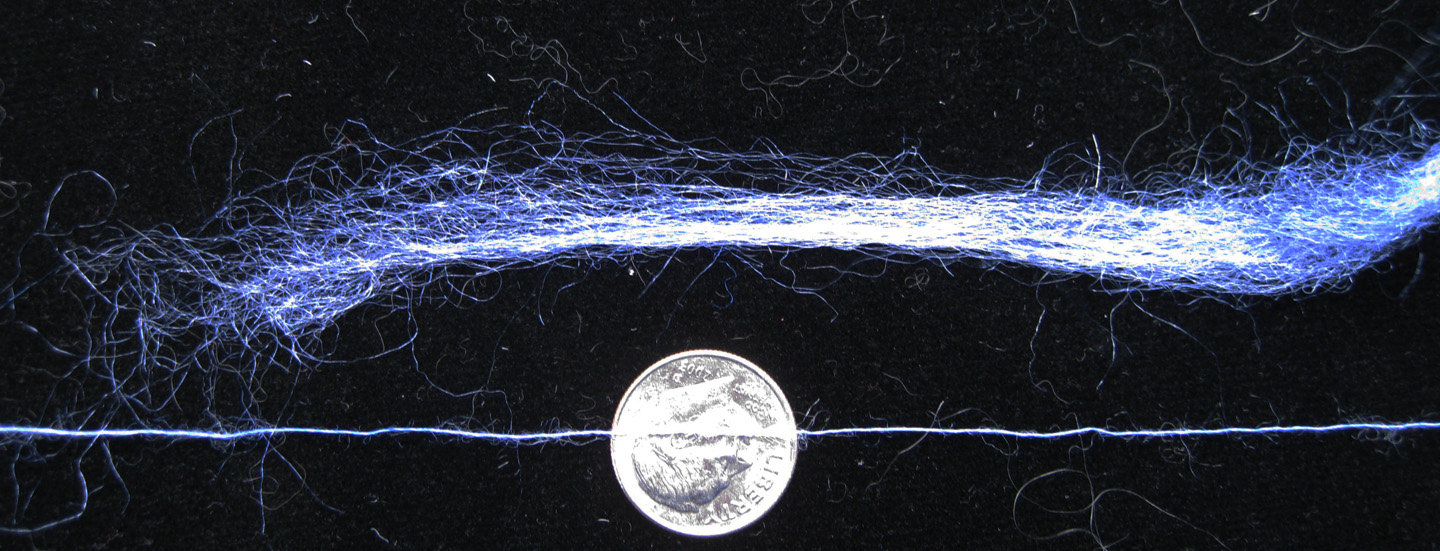
2. Ever Improving Me Batts. Her batts are scary. There's not a tangle or nepp to be found. Fluffy and perfectly blended, they set a standard for carding fibers for lace. She has also mastered the rare ability to evenly blend in sparkle. Make sure you order smooth batts, though. She also offers art batts--lovely, but not so good for fine yarn. Sorry I don't have a close-up of a batt--I've spun everything I bought from her. No leftovers.

3. Adventures in Fiber Batts: Just as frightening as Every Improving Me products, these batts often feature gorgeous color gradations, which keep me from getting bored with a single color.
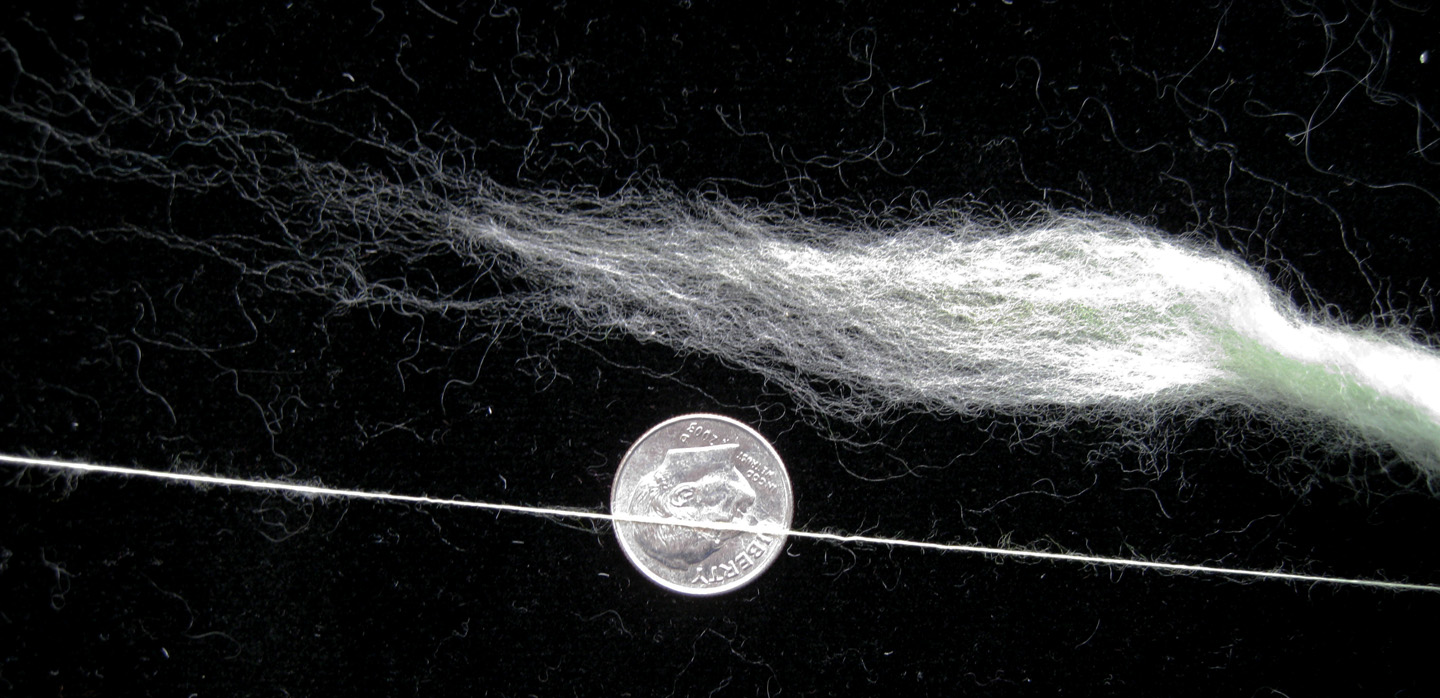
4. Optim Top. Optim is a fine merino (19 micron) that has been mechanically stretched to a finer fiber diameter (14 microns) and chemically fixed to prevent bounce-back (14 microns is a typical diameter for cashmere fiber). Optim is silky, lightweight, and and very strong. The three-fiber yarn I showed above was spun with Optim; the picture below is heavier--about 30,000 yards per pound. It's a bit difficult to dye--it resists wetting out and floats around on top of the water for hours. If you don't want to spin white fiber, weight it and then soak it overnight before trying to dye it.
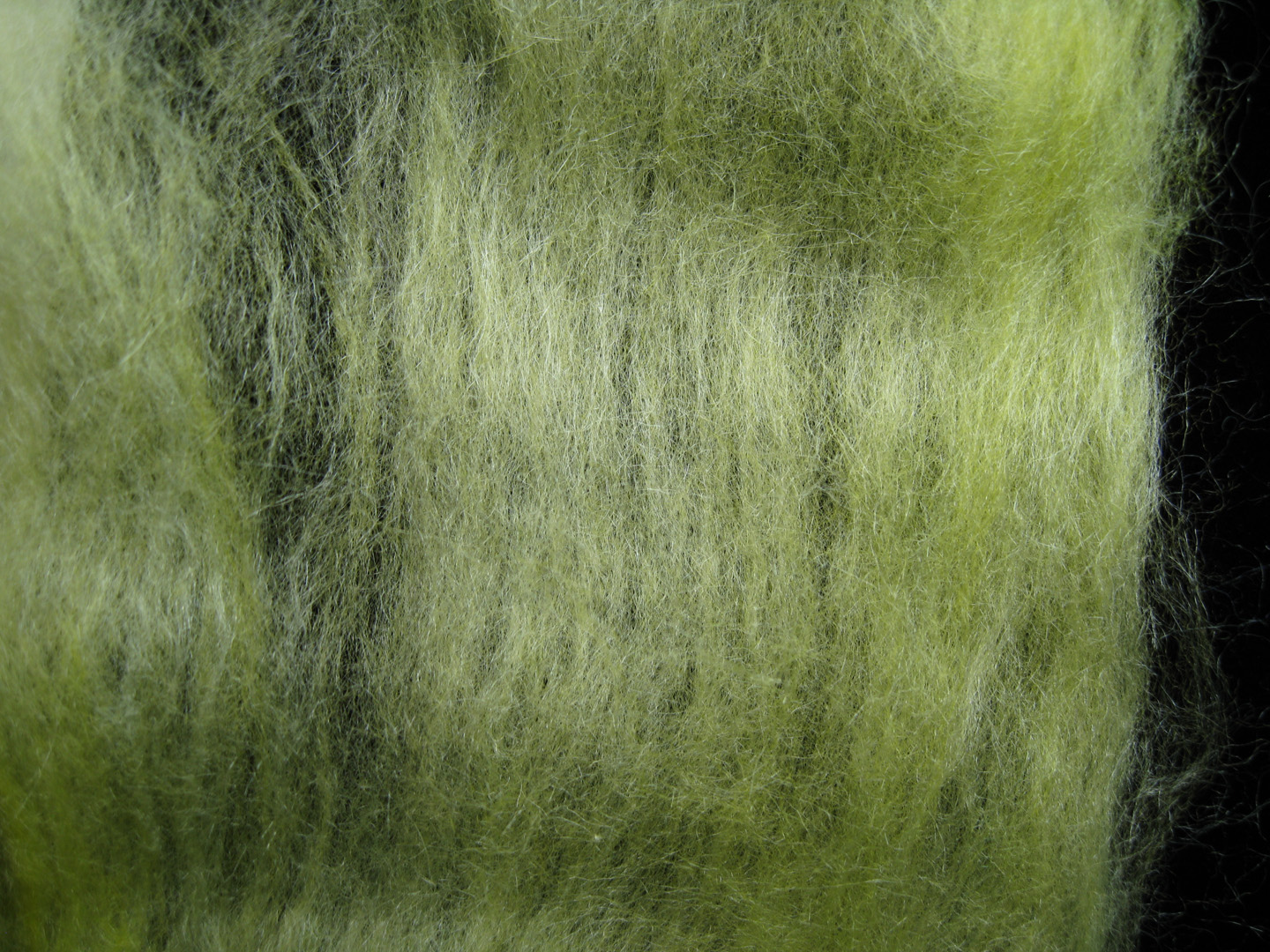
5. Corgi Hill Roving: Heart-melting colors in all sorts of fiber. I am particularly fond of her angora/merino and the wonderful merino/silk blend shown here:
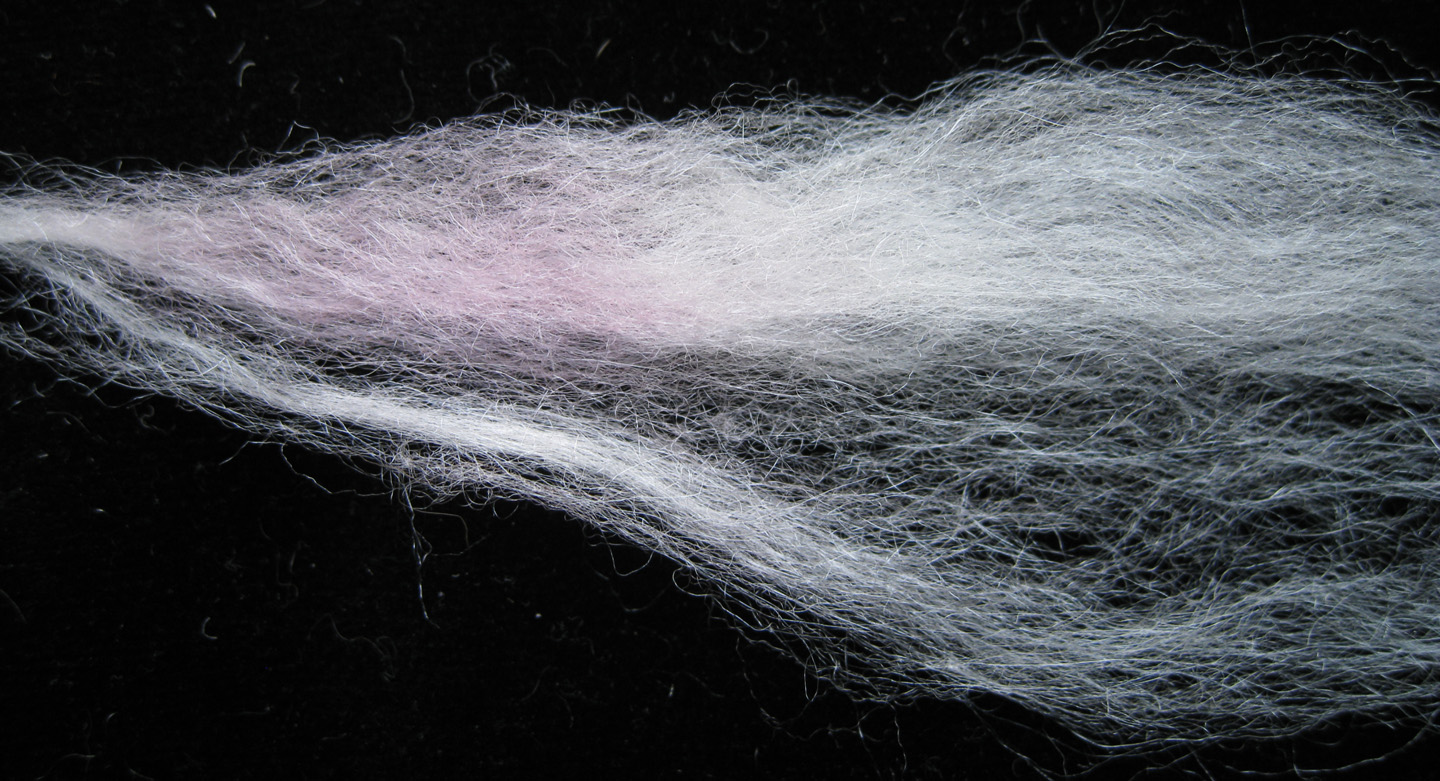
If you take a peek at my Ravelry stash, you'll see that I am helplessly in love with her batts, as well. However, the fibers are sometimes not uniformly blended, which makes it a bit difficult to spin uniform frog hair. For heavier lace yarn, though, you can't go wrong with her carded preps.
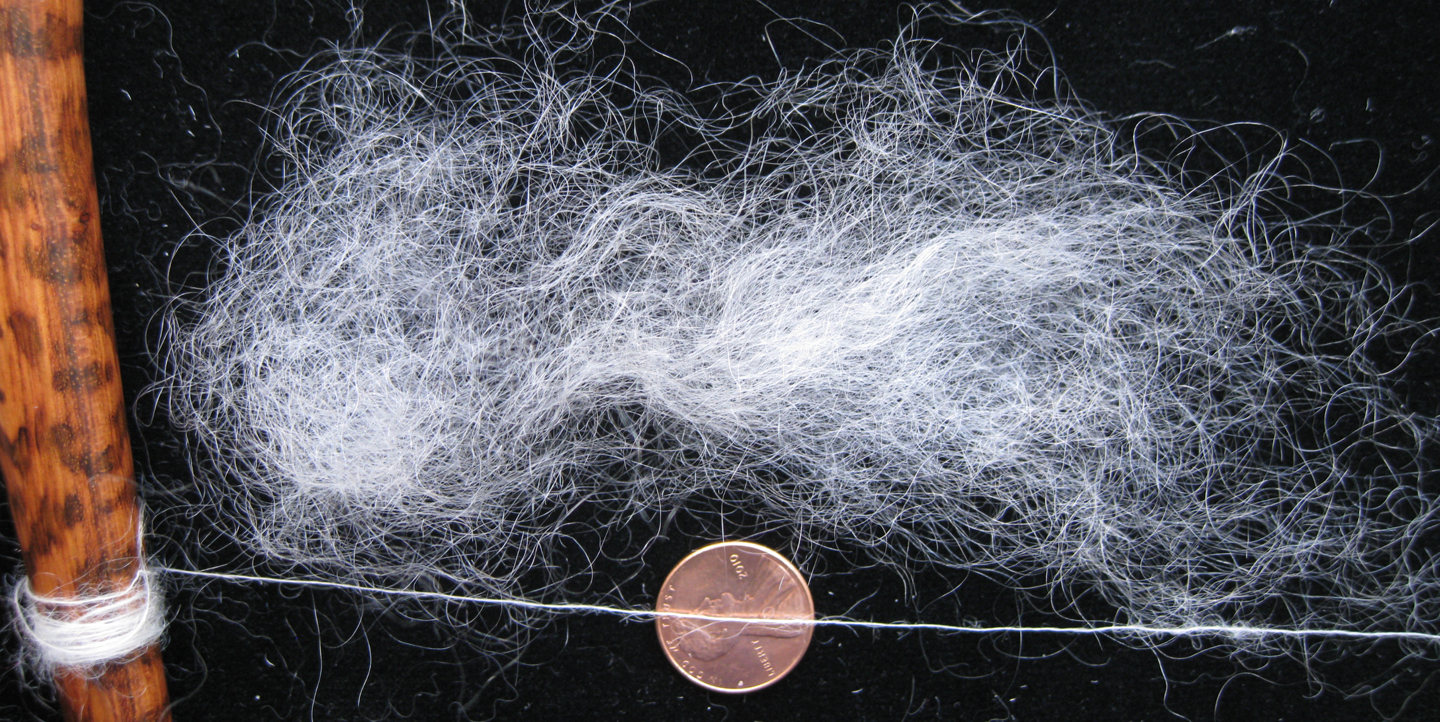
It's certainly possible to spin from a loose cloud of fibers--just be certain that the cloud is uniform and doesn't contain bits of short second cuts. For example, here's a lovely sample of Rainbow Farms Pygora goat fiber spun on a Gripping Yarn Snakewood Russian spindle:
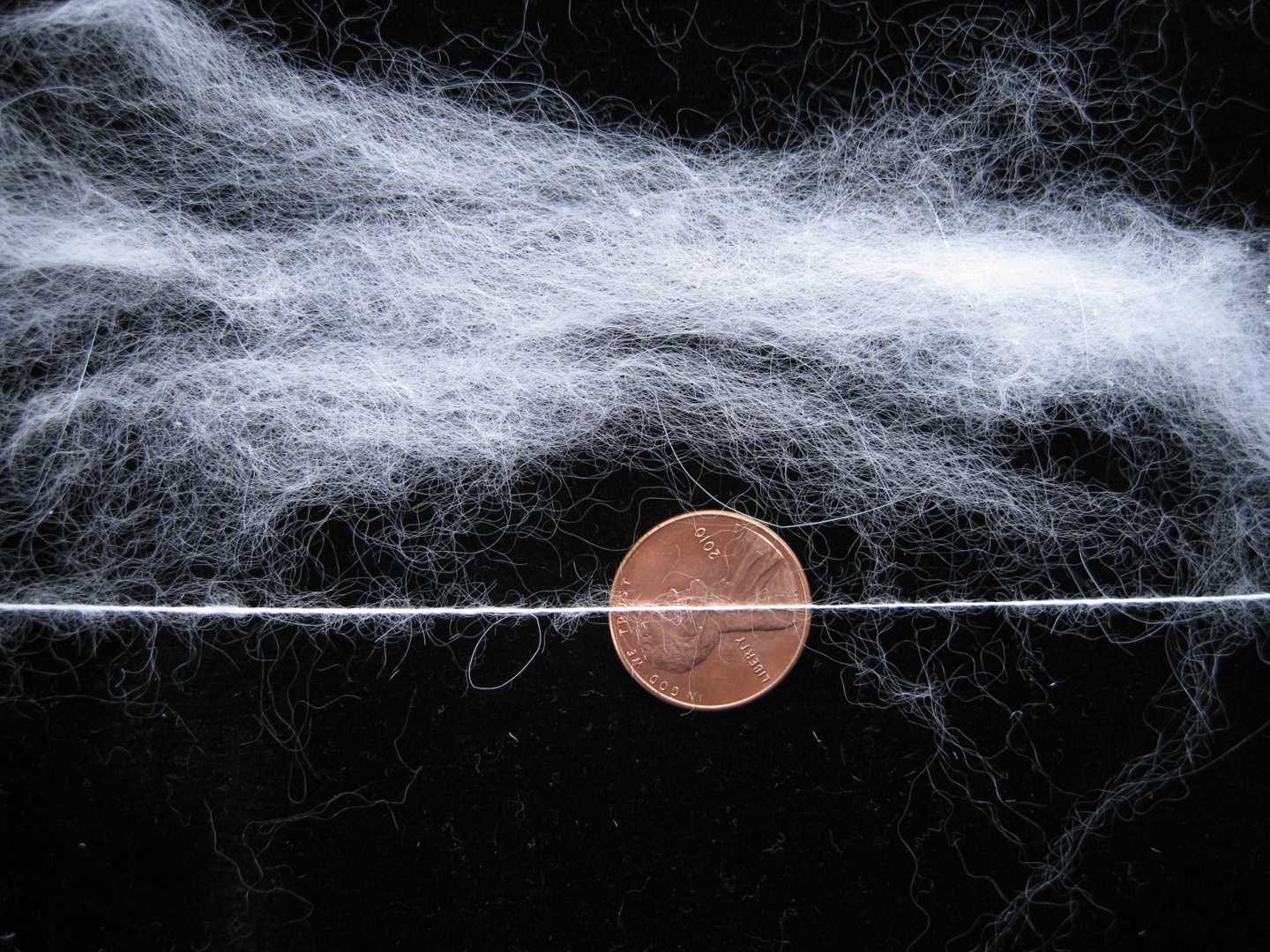
And a bit of Rambo's prime German angora, spun on a Russian supported spindle.
Finally, there are vegetable fibers, such as cotton, that can be spun very fine. I don't care to knit with it, so I don't have anything much to say about it. Bamboo and similarly processed plants are just rayon. Some people love the stuff, but I don't care to spin it or knit it either. There are several Etsy artists whose color sense makes me swoon, but they add bamboo to everything. About the kindest thing I can say about bamboo fiber is that it's shiny and cheaper than silk.
The next post in the series will probably cover charkha spinning. Or not! Stay tuned!
Saturday, October 30, 2010
SAFF
The Maryland Sheep and Wool Show, which I attended last spring, seemed to feature the same two fiber mega-vendors in almost every booth. There's nothing wrong with their stuff (it's actually very nice), but the same large balls of identical colorways in every direction quickly became monotonous. And MDSW was also jam-packed--I had to pass by many booths because they resembled a Tokyo subway car at rush hour. Never again.
Alas, SAFF's spindle selection was small and unpolished--a big disappointment. We did meet up with The Spanish Peacock, who was perusing the wares with an eye towards having a booth next year. If he shows up, he'll surely be mobbed and sold out within an hour of the opening bell.
I did purchase a dark blue Ann Grout turnip spindle and matching bowl because the set was charming and twirled with a pleasant heft. However, the shaft was a puzzle. Made out of a fragile dowel topped with a useless hook, it was too short to be productive, although the washi-paper shim that held it to the whorl was very pretty. Washi paper not withstanding, I turned the spindle over to The Spanish Peacock, who promised to make a usable (and beautiful) shaft out of Blue Mahoe wood. When it comes home, I will post before and after photos.


and lovely merino roving (the top photo is merino/silk).


And I bought a few miscellaneous fiber thingies that were irresistible. The top photo is merino/angora from Frabjous Fibers. The bottom batt, purchased from a local spinnery, cost me all of $4. It's immense--more than four feet long and two feet wide--and I have forgotten what the wool is (it's very soft, but not merino). I haven't decided what to do with it yet, but it looks tailor-made for those Icelandic shawls that graduate from white to black. Given the size, I can probably knit a dozen of them from the spun yarn.


Harry, of course, spent most of the show terrorizing the animals. While it was amusing to watch herds of llamas and alpacas stampede around the barn, I doubt their owners were pleased. Fortunately, he tired of this activity fairly quickly and settled down inside a cashmere batt. I wonder if the poor lady who purchased it has recovered from the shock yet.
Thursday, October 21, 2010
Echo Flower Shawl
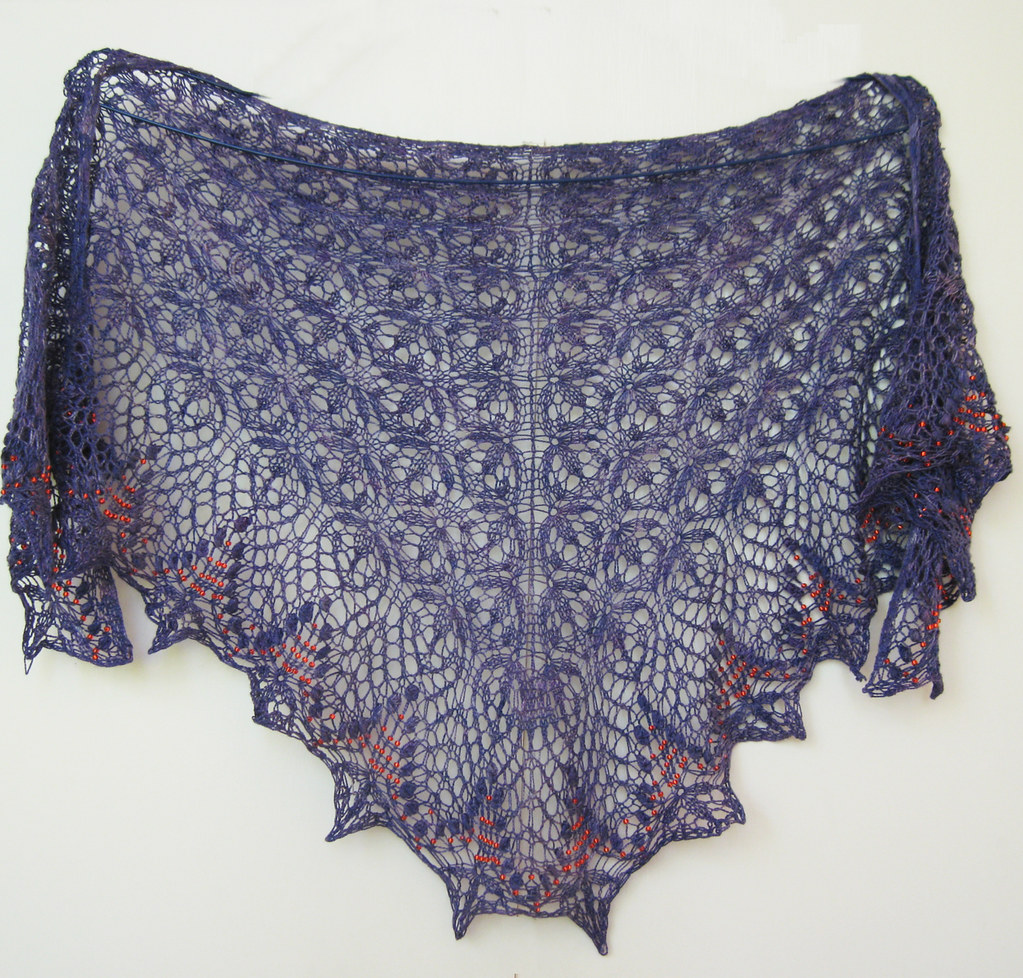


I fully intend to knit it again with some handspun, and I don't believe I have ever before knitted a shawl pattern twice. It's that sweet a pattern.
This is a short post, so I thought I would take the time to remind everyone that I always reply to comments so long as there is a way to do so. If you don't have a Blogger account or otherwise leave me a way to contact you, all I can do is try to reply by telepathy. This usually doesn't work well because there are mentating animals in and around our house that cause interference.
I am off to SAFF tomorrow, so if you happen to see a short lady with a pink stripe in her hair, stop me and say hello, will you?
Thursday, September 16, 2010
Spinning for Lace Part Two: Russian Spindles
As promised, here is a video starring an exquisite ebony Russian Spindle from the Spanish Peacock. The motions are almost identical to those used with Tibetan spindles, but Russian spindles tend to be a bit wobbly until you pack some fiber on them. If you are having trouble starting up with your Russian, wind on some waste yarn until the spindle feels stable.
Saturday, September 11, 2010
Spinning for Lace Part One: Tibetan Spindles
Back at the beginning of the year, I promised to make some videos of lace spinning. And today, Roy and I managed to produce the first in the series. My personal comfort zone is a grist that, when two-plied, makes a laceweight yarn and when three-plied, makes a fingering yarn. Needless to say, all the techniques shown can be used to spin other weights of yarn.
I particularly enjoy supported spindles because:
- You don't have to stand up, lean over or perch on a chair. Spinning can proceed easily in the space allotted for an airplane seat.
- Supported spindling puts no strain on your wrist, neck, or shoulder.
- Unlike the pendulum action of drop spindles, which is sensitive to car movement, supported spindles act like gyroscopes and can be easily used in a moving vehicle.
- You don't have to worry about dropping your spindle and watching the beautiful wood chip, splinter, snap off, or roll underneath the refrigerator.
- Yarns spun supported are pouffier. Gravity doesn't yank on the fibers, which can squeeze out the air, producing a less elastic yarn.
- You can fit a whopping amount of fiber on a supported spindle. I've crammed four ounces on my Spanish Peacock Tibetan. Even better, the more fiber you have on the spindle, the longer it spins.
- For me, supported spindling is about five times faster than drop spindling. I don't have to stop and wind on after a length, as you will see in the video. Every half-hour or so, I butterfly off the temporary cop at the tip and whirl it onto the lower part of the spindle--a big time-saver.
- The whirring sound is hypnotizing.
- Because I am spinning in my lap, I can read a book at the same time, doubling my happiness quotient.
I used two different Tibetans in the movie. The first one, with the red merino/firestar yarn, was crafted by The Spanish Peacock. The second, smaller Tibetan Lite was crafted by Grizzly Mountain Arts. Weight is not a big factor with Tibetans, so I never bothered to put them on a scale. The Spanish Peacock spindle is 13" from stem to stern. The Tibetan Lite is only 10". Both are perfectly balanced and a delight to both the eye and the hand.
So, make some popcorn and watch the video. I hope you find it worthwhile!
Friday, September 10, 2010
Fleegle's Fluff Analysis
Before we embarked on our bunny adventure that culminated in the addition of Rambo to our family, we first had to decide what kind of bunny we wanted. Well, clearly we wanted one with a great personality, but aside from that, I wanted prime angora fiber to spin. So we did some research and you guys get to read all about it. Or not. Harry fell asleep on the "H" key in t*e middle of t*e second paragrap*. I couldn't type muc* until *e woke up.
...................
There are four major rabbit wool breeds: Giant, French, English, and Satin. Germans are a subgroup of Giants, and always white. German rabbits don't shed, so they are shorn about four times a year. The other three types are usually plucked, but I gather that some people shave their bunnies in hot weather. Angora fiber is eight times warmer than wool and I suspect that most of them would faint (or worse) in the summer heat we've had this year.
Germans are always white with red eyes; the rest of the breeds come in a dazzling assortment of colors, many of which have lovely, evocative names--frosted pearl, lilac, silver fox, blue, and my favorite, copper agouti. In reality, there are only four colors--white, black, gray, and brown--with an infinite variety of shades, tones, and markings.
Because I wanted to dye the yarn, we started hunting for white rabbits. But before we actually bought one, I needed to do some fiber testing. I therefore ordered small samples of each breed from Etsy vendors--an inexpensive way to dabble in angora spinning.
Angora staple varies considerably, but should be about 1-3" long for pleasant spinning. The German fiber was neatly machine-carded into top. I don't own any carders, so for the other three samples I pulled handfuls of fiber apart several times until I had a semi-orderly mass.
The first bag I opened was the English fiber. And the first few handfuls were delightful to spin--something like yak, if you've ever handled that fiber. The handfuls were fluffy and soft, spinning into a fairly smooth, thin yarn on my electric spinner with occasional blips of short fiber.
To my dismay, however, the bottom half of the bag was full of matted globs and second cuts too short to spin comfortably. Clearly, the owner of this bunny was a meticulous caretaker, because she first clipped off all the long fiber and then went back over bun-bun a second time to make sure all the matted clumps and fuzzy bits were gone. Too bad she decided to pad her retail fiber with them. Half the bag went into the trash can.
I spun the nicely plucked French fiber on a spindle. French angora is noted for its guard hair, which is not the stiff, scratchy stuff found on some sheep, goats and camelids. It's poofier, soft and very fine. In fact, it's the guard hairs that bloom, making French angora yarn so cuddly (and shed-prone). Despite my best effort, I couldn't get a perfectly smooth yarn from it. It spun a bit thicker than the English, but produced a really lovely result, blips and all.
The incredible German roving spun like whipped cream--there's no other way to describe it. I dashed back to the Etsy vendor, only to discover that there was no more. It spun into a perfectly smooth yarn; grist didn't seem to matter. This stuff was happy to be spun very thin, very thick, or medium with no complaints.
Alas, the Satin fiber was really too short to spin comfortably. I put the bag away after an hour of painful micro-short-draw. If I ever get a carding machine, I might experiment with it.
I took some photos, but I ended up with an assortment of white/gray fluff and yarn photos with no distinguishing features and I didn't want to bore you with those.
Suffice it to say that my angora research was thorough and I pass on the following bits of wisdom to you:
- If you buy a bag of plucked or shorn fiber from an Etsy vendor you don't know, don't be surprised to find that some of the material is unspinnable.
- Prime angora can be easily spun on just about anything--spindles, e-spinners, charkhas, or your favorite foot-powered wheel.
- If you find any German angora roving, don't buy it. Send me the link immediately.
- Cover your lap with a piece of velvet or other adherent material to catch all the flyaway bits. Do not sneeze around loose angora.
- Undiluted angora yarn is not stretchy and is really, really warm. Such yarn would make an excellent scarf for anyone living in or near the Arctic/Antarctic Circles. Mixing angora with fine wool, such as merino, will produce a sproingier and more temperate result. Add more merino the further south you live. Those folks on the equator probably should skip angora altogether and stick with Vorpal Bunny leg fiber, which often resembles cotton, except for the black variety, whose fiber is indistinguishable from fwooper feathers.
Saturday, August 21, 2010
Rambo--A Fleegle Fractured Fairy Tale
Once upon a time, on a typical summer day, I was peacefully carving a voodoo doll of my former employer out of a radish, when Harry blew in the door, scrabbling across the floor so quickly that he left a small sonic boom in his wake. He informed me, in a terrified sqeak, that we had a visitor, and the visitor, was, well, pretty scary. So scary in fact, that Harry scuttled under the refrigerator without his bagpipes, smoking jacket, or box of Lindt truffles.
I carefully parked the paring knife in the radish's midsection, wandered to the front door, and recoiled in horror. Lounging atop a camo duffel bag was a furry white rabbit wearing killer shades and camo fatigues. Leaning against the duffel was a well-used backpack with a bunch of carrots lashed to the side and K-Bar knife dangling from the webbing pocket.
"Hello, ma'am" said this nightmarish vision.
"Erm, hello." I replied. "Can I, um, help you?"
"Looking for a spider named Harry. About so big." The rabbit held his paws about eight inches apart. "Wears sissy clothes and totes a set of bagpipes. You seen him?"
I cleared my throat. "Well, yes. He's currently under my refrigerator. He lives here when he isn't on a karaoke tour or off on one of his Terrorize the Tourist gigs."
"I'll wait."
The rabbit slid off the duffel and opened a side zipper, extracting a lethal-looking weapon and a cleaning kit. He propped the duffel and backpack against the porch rail, made himself comfortable, and proceeded to meticulously disassemble the weapon.
I retreated to the kitchen, fumbled for the phone, and called Roy.
....beep beep boop beeep beep booop beep...
"Hello?" queried the voice of sanity.
"Sweetheart, there's a Force Recon Rabbit named Rambo sitting on the porch cleaning a gun." (I deduced his name and service from the name tag rakishly embroidered on his flak vest).
Roy has lived with me for a long time, so instead of wasting time questioning my sanity or what I had to drink at lunchtime, he merely asked me what sort of gun was being handled by those fluffy little paws.
"Just a second." I put down the phone and peeped out the door.
"Excuse me," I said. My husband wants to know what kind of gun you have there." I omitted any reference to fluffy little paws.
"M4A1 Close Quarters Battle Weapon (CQBW) with a Special Operations Peculiar Modification (SOPMOD) M4A1 kit."
I picked up the phone and repeated the gobblydegook of acronyms.
"Cool," said Roy. "I'll pick up some parsley nibbles at the grocery store and be right home."
Roy spent most of the afternoon on the porch sharing beers and swapping war stories with Rambo, while I pleaded with Harry to come out from under the refrigerator. He adamantly refused, even when I lovingly assembled a bowl of freshly picked raspberries topped with his favorite organic whipped cream.
When Roy finally wandered in the door (with carrot crumbles and splotches of gun oil on his t-shirt), he explained how we ended up with a ferocious fluff ball reconnoitering the front door.
Apparently Rambo had hopped all the way from Fort Bragg, where he works as a tracking rabbit for Force Recon. Having taken a few vacation days, he opted to spend part of his leave time hunting down the spider who snitched his custom-designed carrot peeler (scrimshaw shaft, glove-leather holster) after stiffing him for $100 in a poker game last year.
"Uh oh," I said. What do we do now? Call his commanding officer? Call the police? Hire a hit fox?"
Roy thought about it a minute. "Maybe we can just return the peeler and the money and hope he hops on to his vacation destination." Rambo apparently was on his way to compete in a San Shou kickboxing championship.
I peered around the corner and noticed that, although the equipment was still piled up on the porch, there wasn't a single whisker to be seen anywhere in the vicinity.
"Uh oh again," I said to Roy while walking back into the kitchen. "Where did he go?"
Roy pointed to our meager vegetable garden. "He's out there kicking the tomato plants." Cherry tomatoes were popping down into Rambo's outstretched paws. When he had finished stripping the tomatoes, he picked off the miniature eggplants, pulled up a few radishes, and calmly proceeded to wash his paws and face in the pond. He then hopped back to the porch, picked up his weapon, and began perimeter patrol.
I fell on my knees in front of the refrigerator and explained the situation to Harry.
"Harry, you've got to return his peeler. And his hundred dollars. And maybe throw in a bouquet of squash blossoms or something. He's picking our garden clean! And scaring the turtles in the pond!"
A tiny whimper was heard from the sub-fridge.
In the meantime, our usually placid cat, Laptop, spied Rambo marching over our basil plants, and gave herself a quick lick-and-wash. She sashayed over to the rabbit, introduced herself with a small giggle, and offered to show him around the neighborhood. Then she twitched her whiskers in a deplorable display of flirtation, wrapping her tail around Rambo's rather impressive lats. So much for any help from the feline contingent.
Let's summarize the current situation. Harry's incommunicado. Roy's plinking at the dahlias with the M4A1. Laptop's playing fur games with a military lagomorph.
Taking matters firmly into my own hands. I pulled out Harry's drawer apartment and sifted through the contents. Among a vast assortment of items that I won't bother to recount, I found my engagement ring, a skein of quviuk lace yarn, a set of nude black-widow-spider cocktail sticks, two containers of truffled pate, and finally, underneath a rather impressive collection of Chocolate Frog cards, the carrot peeler and a wrinkled hundred-dollar bill.
I pilfered the latter two items (and my ring and yarn) and exited the back door.
"Excuse me," I said to Rambo. "I, erm, found your missing items and would like to return them to you with our heartfelt apologies. Sometimes Harry gets a bit, frisky, and er, forgets himself."
"Thank you, ma'am. I do appreciate your honorable behavior. Rambo gave me a breezy salute by folding over one ear and smartly tapping his forehead.
"If it's not too much to ask, I'd like to camp in your garden this evening. Laptop said she would provide some vegetarian MREs and entertainment. I'll make sure the yard is safe from meercats tonight." He chambered a round and sighted in on the last remaining cherry tomato.
"Right. Good, Hate it when those meercats attack." I mumbled as I cautiously backed away, a bit horrified at the sight of our last cherry tomato splattering over an annoyed-looking petunia plant.
The next morning, Rambo, along with his camouflage equipment, was gone.
......
Harry crept out from under the refrigerator. Roy pouted. Laptop received suggestive postcards from in-country locations. I returned to my voodoo doll carving. A year passed.
.........
Another typical summer's day. The doorbell rang. I stuck a final pin into my He-Who-Must-Not-Be-Named-in-This Blog-for-Fear-of-Lawsuits durian-fruit voodoo carving and answered the door. There stood Rambo, resplendent in freshly pressed BDUs, bearing a frothy bouquet of catnip.
"Hello, Ma'am," said Rambo politely. "Laptop around?"
A furry mass shot between my legs and, in a totally unseemly manner, leapt into Rambo's waiting arms. The two of them overbalanced, rolled down the front path in a breathtaking display of revolving whiskers and fur, coming to rest in a patch of outraged day lilies. We didn't see either of them again for several hours.
When the two of them finally emerged from their flowery bower, they carefully groomed each other before wandering into the kitchen, paw in paw. Over a platter of carrot canapes, Rambo related a series of fur-raising escapades from the previous year and then announced that he would be teaching a Wilderness Survival course and Escape and Evasion at the Ranger camp in the next town.
"I must be getting soft," Rambo said bashfully. "I'd sure like a place to stay off-base. Those army-issue burrows are cramped and noisy. And the lettuce/timothy hay MREs leave a lot to be desired."
Laptop gave us her patented Irresistible Pleading Cat Expression That Causes Instant Human Capitulation.
We struck a deal. In exchange for joining the fleegle team here in Georgia, he'll get fresh lettuce, wireless internet, and a custom-built hutch. In return, Rambo has agreed to provide us with companionship, a comprehensive perimeter patrol schedule and, of course, his gorgeous angora fur.
Bet you were wondering if I would ever tie this story into fiber arts, right?
And so we all lived happily ever after, except for Harry, who spends a lot of time under the fridge playing mournful tunes on his bagpipes.
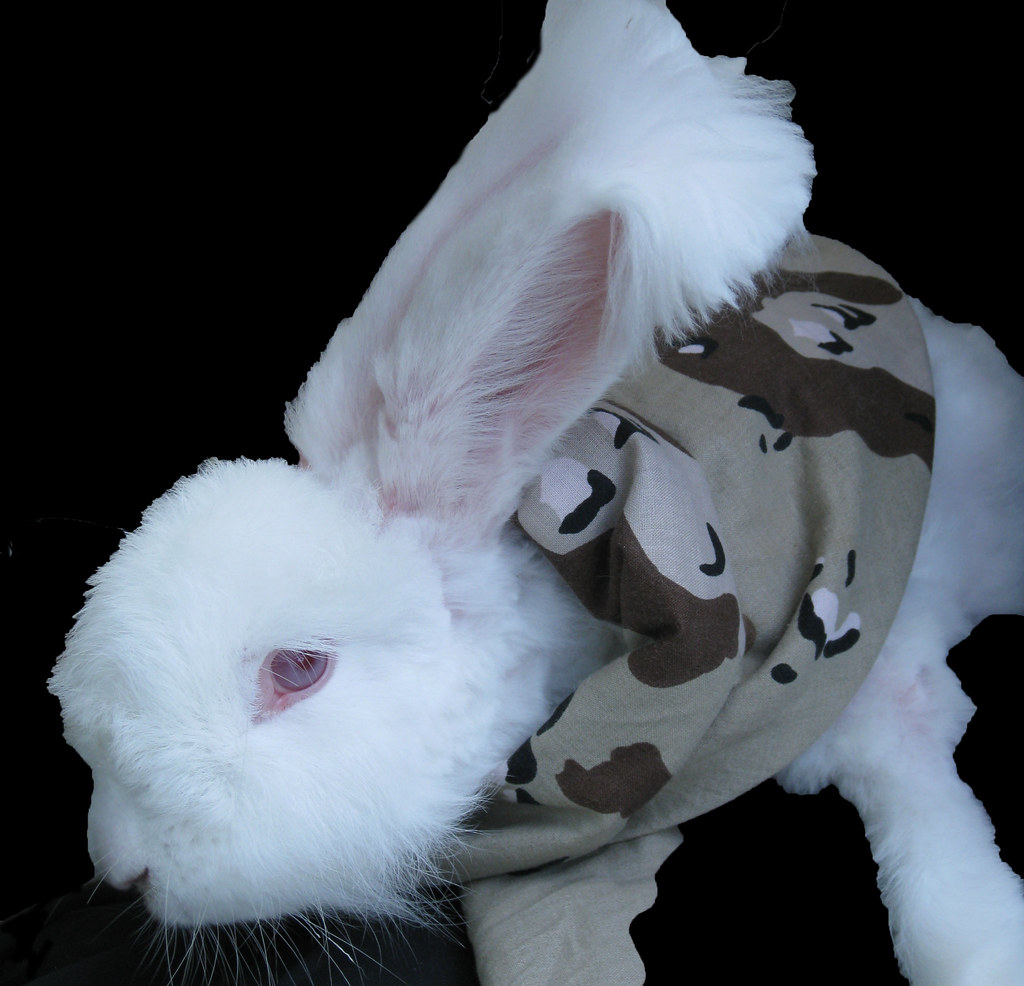
The End
Wednesday, August 4, 2010
Cool Winter Sweater
Many of you are probably complaining about the weather--killer temperatures, rampant humidity, eyeball-searing sunshine... But let's consider the positive aspects of the heat and humidity.
- It's no longer necessary for us to bother with cooking vegetables from our garden. We can simply glance outside and watch them being gently steamed in the aftermath of a summer thunderstorm. This natural cooking process has been so successful that we don't bother dragging our healthy groceries into the kitchen anymore. We simply toss them on the back steps, sprinkle them with a little tamari, and sun-roast them.
- Should you be the proud owner of a moon rat, fairy bluebird, or capybara, you can rejoice in their comfort--after all, tropical rain forest is their native habitat.
- And finally, if the study of molds is your specialty, you won't need any expensive laboratory equipment to pursue your interest.
Alas, it's difficult to get enthused about knitting with wool, but a friend recently had a baby and she requested a warm sweater. The first thing I did was stroll around the Web, looking for superwash wool. I found a veritable mountain of the stuff, all priced at about $10 for 100 yards. A quick calculation revealed that a little sweater for a one-year-old (we're into future growth here) would cost about $50. A bit much for an item of clothing that would be quickly outgrown.
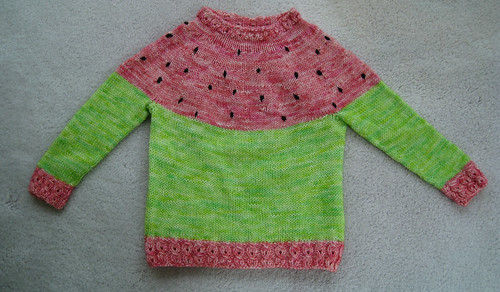
Instead, I ordered a skein of Henry's Attic superwash DK merino for $14, and dyed it myself in the coolest color scheme I could think of: watermelon.
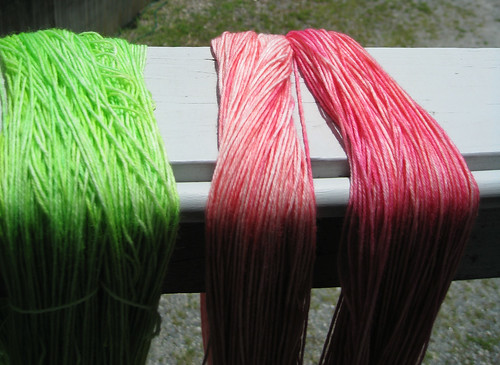
A quick peek at my Knitware program produced a seamless, bottom-up pattern. And a day or two later, my needles produced this:
I used a decorative ribbing on the hem, cuffs, and neckline. This little rib looks wonderful on socks, too.
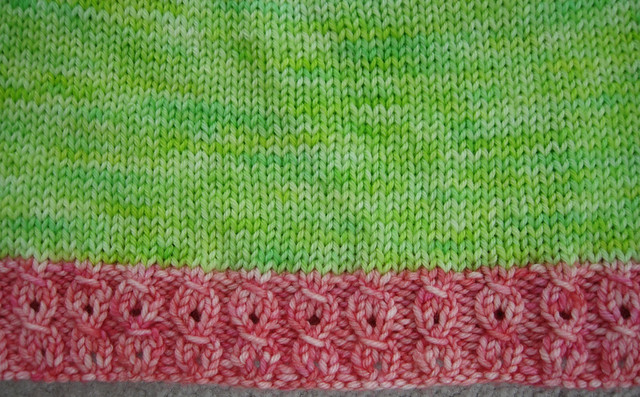
This pattern is meant for circular knitting.
Cast on any number of stitches divisible by 4.
Row 1: k2, p2
Row 2: k1, yo, k1, p2
Row 3: k3, p2
Row 4: k3, p2
Row 5: k3, then pass the first stitch over the other 2 knits and drop it, p2
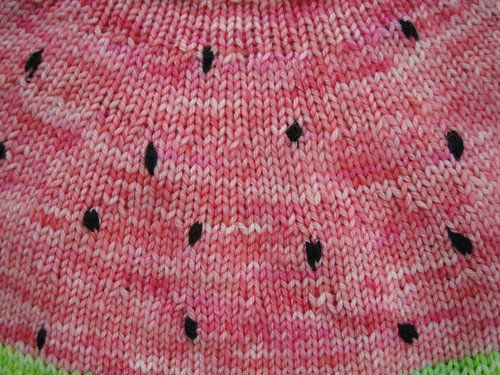
And finally, I embroidered some seeds on the yoke.
Keep cool, everyone. The next blog post will feature a brand-new fleegle fairy tale, so stay tuned!

