Showing posts with label spinning. Show all posts

Friday, January 20, 2012

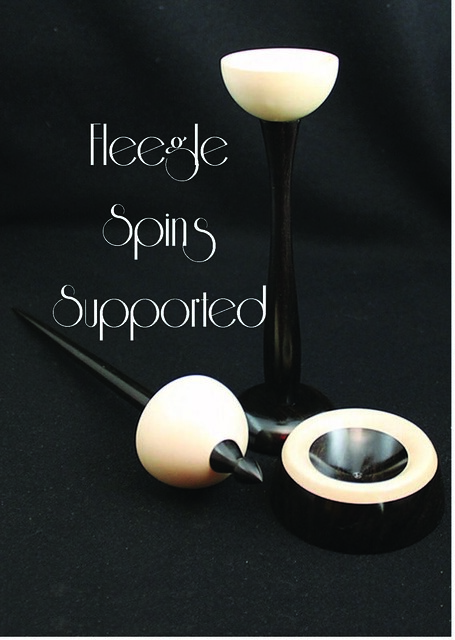
Fleegle Spins Supported--The Book!


From the back cover...

The greatest book ever written about supported spinning! Looks offstage. Yes. I know this is the only book ever written about supported spinning, but I have to write something for the back cover copy ...glances offstage again ...because the guy who printed the books told me blank covers look, well, suspicious. Turns toward the stage wing... I am not going to rant about that on the back cover... faces front... OK, so this book is just full to the brim with over 400 pages describing everything you need to know about spinning with a supported spindle. Included with the erudite, entertaining text and stunning photographs are 25 videos taken by total non-professionals who had some trouble figuring out which buttons to press on the camera, but all in all, we think they came out pretty well!

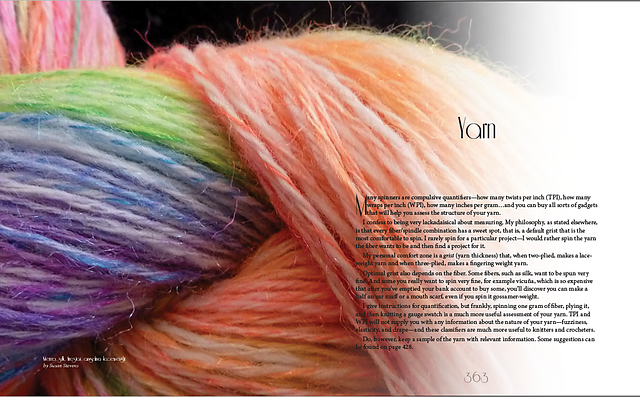
A few sample pages to whet your appetite...


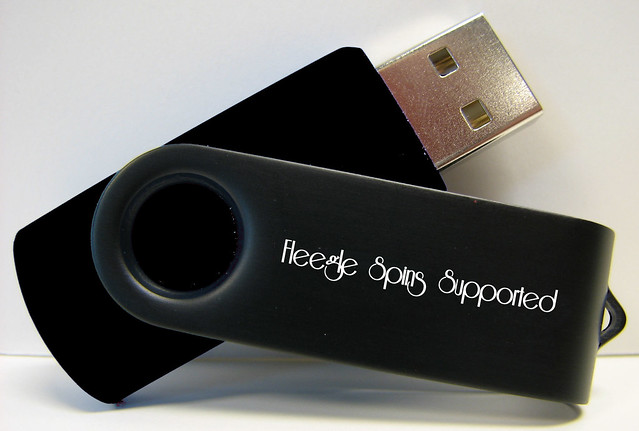
Probably the first-ever interactive PDF to ship on a flash drive! It might actually be the first, but we don't want to get sued, so we inserted a waffle word. Heh.


Interactive PDF with embedded video, shipped on a USB 2.0 flash drive 
400+ full-color pages, suitable for any computer or tablet
Requires Adobe Acrobat 9 or later to take advantage of the
interactive features and software capable of playing .MP4 video files


Click here to order the hardbound paper book. $100, plus shipping
SOLD OUT
A new printing might be available in 2013, depending on demand.
Please message me on Ravelry (fleegle) and we will add you to
the list for another printing.
400+ full-color pages, suitable for any coffee table
Includes the ebook flash drive version


Testimonials!
We couldn't find anyone to write glowing praise, mainly because the book was just published, so we made stuff up!


Alexander the Great would have said...
If I had had this book while I was facing Darius III of Persia, I might not have actually won the battle, because I would have been fiddling with fiber.

Cleopatra would have said...
I could have done some real damage to those asps with a pointy spindle.

Shakespeare would have said...
To spin or not to spin, that is the question. But after reading this book, I feel that spinning is the answer, not the question. Anne really liked the book, too.

Einstein would have said...
S-twist or Z-twist, it's all relative.

Feel free to submit your own testimonials and if they are as positive as the ones above, we'll use them! Just think, you get to replace Alexander the Great's or Einstein's verbiage with some of your own!

Tuesday, August 2, 2011

Batt Editing--Part 2

Readers of this blog probably know how much I love glitz, but many battmeisters eschew such additives for a variety of reasons. Anna of Corgi Hill decided against working with Angelina fiber after a bag of it exploded and left her, well, rather sparkly. Others feel that Firestar (trilobal nylon) and Angelina are scratchy. And some feel glittery yarn is somehow undignified.

Not me! I love to spin with glitz, I love to knit with glitz, and search out batts containing glitz, preferably in high concentrations. So it should come as no surprise that I figured out a simple way to add sparkle to batts that lack what I consider an essential ingredient.

If you paid attention to my first Batt Editing post, you might recall that I showed you how to split a batt into two layers. But if not, let me show you again.

Here we have a perfectly lovely example of a glitz-less batt from the immensely talented Zauberzeug :


I carefully peel the two layers apart...


...and sprinkle the bottom layer with Angelina:


Just flop the top layer back on the bottom layer:


And roll it back up:


Needless to say, you can use this technique to add anything you might want to spin--strands of silk, Firestar, exotic fibers of which you only have a tiny bit, or slices of pepperoni, and so on. 

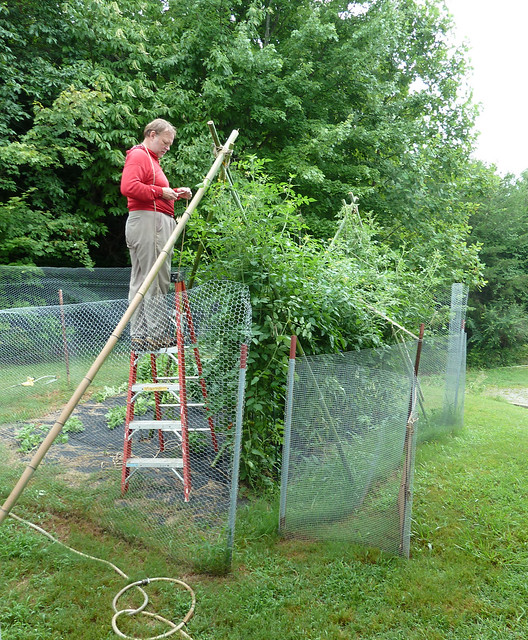
On another note, I promised you some killer tomatoes, so I would be remiss if I didn't include a photo, taken several weeks ago. At that time, the plants were approaching 11 feet in height, and had outgrown our double stack of tomato cages by a wide margin.


Roy, who was an Eagle Scout and knows how to do things like assemble tripods, crafted several out of our very own bamboo and is seen in the above photo tying one of the plants, fondly named Terminator One, onto the supports. I should add that the plants are now over 14 feet tall, although we are training them down the supports, because we don't have a taller stepladder and would feel idiotic trying to harvest our crop by tossing rocks at the fruit.

Last year we planted four plants, three of which promptly died. The survivor barely attained a meter in height and spent the entire summer generating six puny tomatoes. This year, we figure to harvest about 200 pounds of fruit from the four plants that were really cute when we plopped them into the soil but now consume a cow a day and we'd better be on time with the feeding....


Monday, July 11, 2011

Batt Editing

Although Harry is perfect, the rest of the world generally needs a little tweaking to rival his flawless stature. It's rare that I spin a batt right out of the bag--I usually add or subtract something, especially if I have a specific project in mind.

Harry thought it might be instructional for me to show his faithful readers how I edit a batt. According to him, I don't have any faithful readers, which instigated a shouting match (MORONIC BIPED!  HAIRY MIDGET OCTOPUS!, and so on). While we were hurling epithets at each other, Rambo kindly loaded the text and images into the blog and then proceeded to clean out the vegetable bin because nobody was paying any attention, and the lettuce was going to wilt soon, anyway.

Onwards to batts.
 
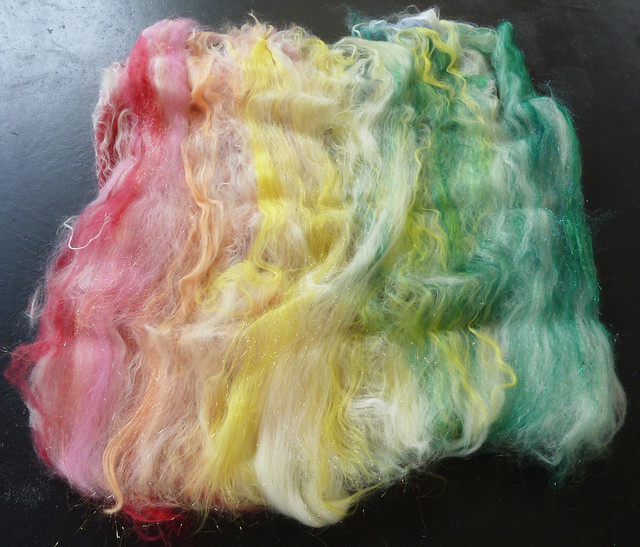
Let's take this lovely item from Lampyridae, euphoniously named Sarah Bejeweled. It's an eclectic mixture of  milk, bfl, silk, soy, merino, alpaca, and sari silk. but is very smooth, if a bit mussy. Notice the colors after the greens are kinda folded under...you can't see them in this picture.


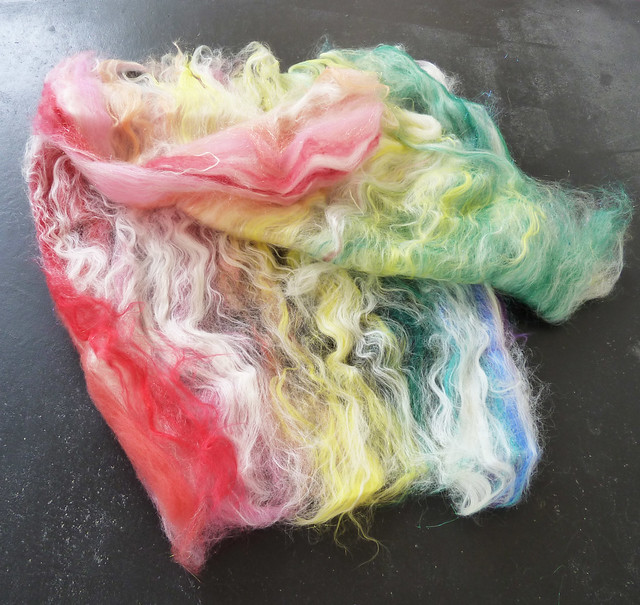
If you've ever fooled around with batts, you've probably discovered that most of them are layered, and it's easy to separate the layers by gently pulling them apart. The blue and purple are peeking out on the bottom layer in this image:


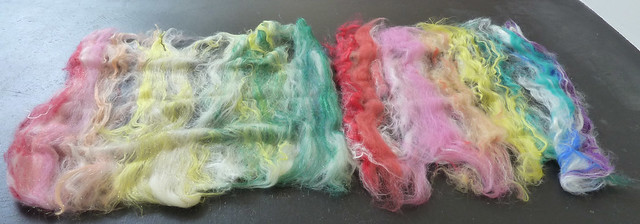
Here are two two layers, side by side.


Now to strip the batt into bite-sized pieces. I started on the left, coaxing each color transition into a little swathe.


I took a bit of the next color, pink, into the second strip, and a little more pink in the third one--mixing the colors this way makes for smoother transitions.


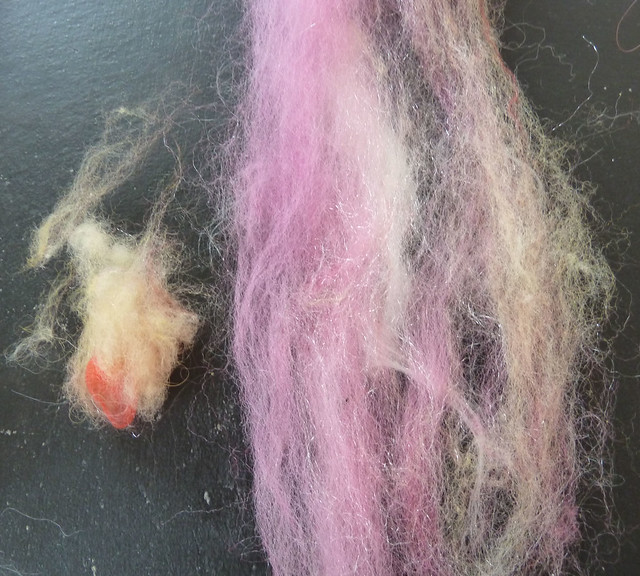
Sometimes, when pulling off a strip, the wrong color crawls over....


It's easy to just peel it off and put it back where it belongs.


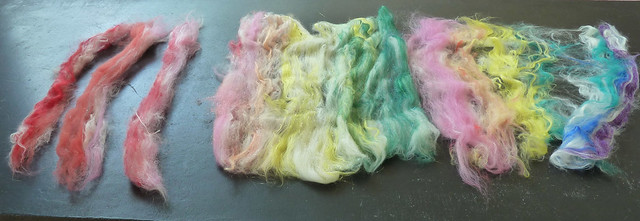
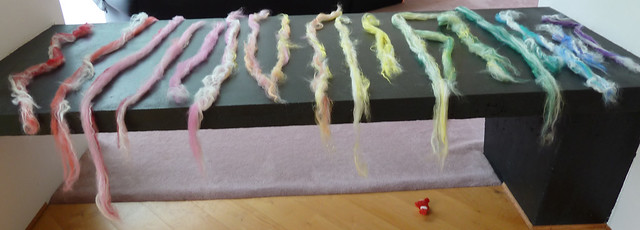
Here's what the deconstructed batt looks like now.


The next step is to do a little drafting. Although the batt is smooth, it has a fair amount of fibery locks lying on the surface. When you try to spin it them in, the loose bits can fall down or become folded over, creating a snarl. If you're spinning thick yarn, this fluffiness isn't a big problem, but for fine spinning, it's better to try and incorporate the little rogues into the main wad of fiber. And because I will be spinning fairly fine on a supported spindle, I want to loosen up the fiber, as well. Both of these tasks are done simply by gently pulling sections of the strip like this:


And here's the first attenuated strip. Notice there's some white fiber that refused to play nicely with the rest of the strip. I just inserted a few twists to keep it from running away.


Here and there, I found some bits of fiber that didn't belong, as well as a few nepps that would simply make a blob while spinning. I just  picked them off.


And we're almost finished. Notice the adorable cat toy...Laptop couldn't be with us today, due to a prior engagement, but she left a clownfish proxy for Harry's faithful readers to admire.


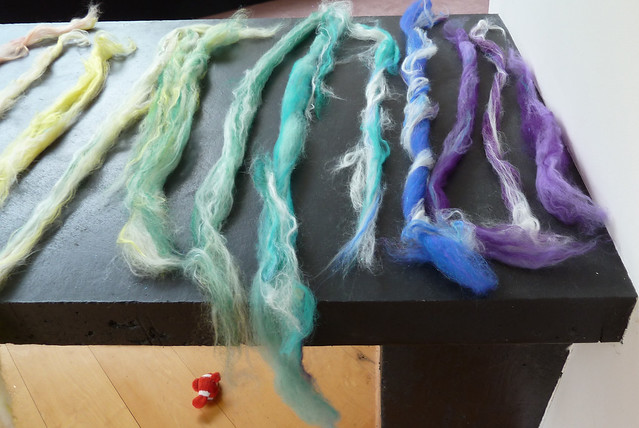
The transitions looks pretty good, but  the sequence is a bit lacking in blues and purples. Dipping into my batt stash, I found colors that would work, and added a few extra strips.


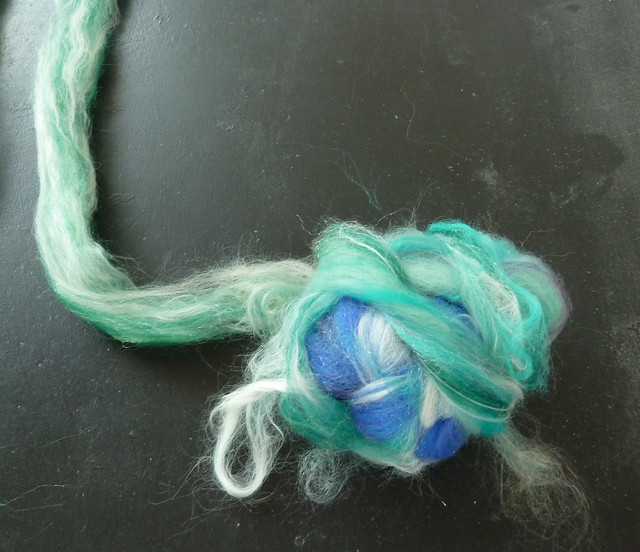
To  keep everything neat and tidy, I rolled up the strips, one after the other, into a squooshy ball...


And put it into a plastic bag. It's ready to go.


On another note, I report that over the course of the last few months, the occupants of the fleegle household endured three eye operations and two root canals, thus triggering our favorite floating holiday: Celebrate Something Random Day. To commemorate such occasions, we always have a cake, decorated especially for the occasion being celebrated. And so I present to you the Infamous Fleegle Eyeball and Teeth Cake of 2011. It was delicious!


And before you ask, Nancy, it's from the Country Bakery on 75 between Ingles and White County Jail. :)

Wednesday, January 19, 2011

Where in the World is fleegle?

No, I was not suffocated by mountains and billows of the Queen Susan shawl, although it was a close call there for a few weeks. I've actually been quite busy, but just haven't had the urge to photograph anything. Fortunately, Hyperactive Harry got a new camera for Christmas, and condescended to take pictures for me. I winnowed out the dross, namely an extremely unflattering set of early-morning-before-coffee snapshots, and instead present you with the remainder.

First, I managed to slog through the Queen Susan border--all 165 miserable rows. By the time I was finished, I hated the pattern, loathed the yarn, detested the stitch markers, despised the needles, and abhorred the color. The instant I finished the last stitch, I zoomed into a closet, threw the huge hairnet inside, and slammed the door. At some point, I will have forgotten the tedious slog through the endless rows of repetition and optimistically resume on the edging, but in the meantime...

I've been busy spinning. All of the skeins shown below were spun on Tibetan supported spindles.


And some closeups...


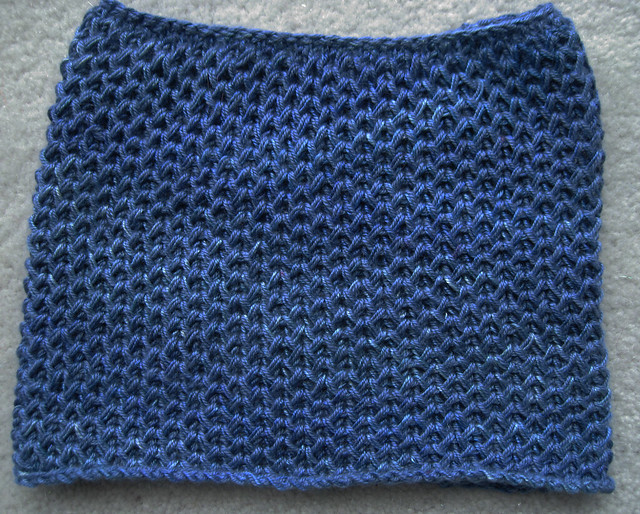
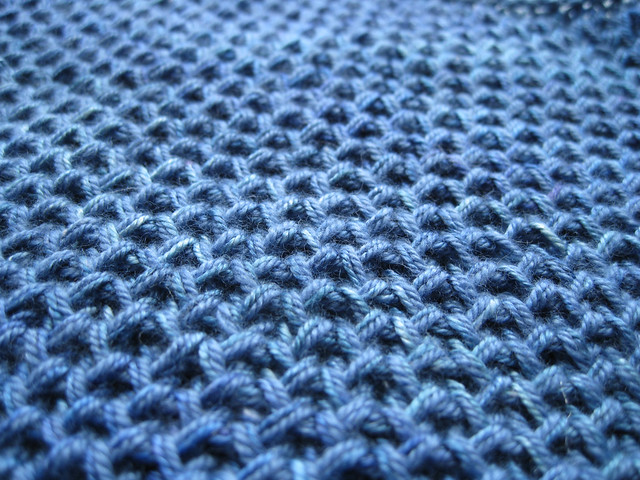
After the Knitting gift rush was over, I took the incredible step of actually knitting warm things for myself. The first is a simple neck warmer in circular honeycomb brioche stitch. I wanted something very warm and soft, so used one strand of silk and one of cashmere. Fortunately, Harry wasn't around to see the first attempt. I forgot that brioche stitch is really very stretchy...and the result was more of a waist warmer. By eliminating 3/4 of the original stitches, I obtained something that actually fits my neck.


I always wanted a pair of hand-warmers, but always ended up giving them away. This pair is a keeper. Knit from a worsted-weight merino-silk, the pattern is my own invention. Too lazy to find a cable needle, I simply knitted three rows, then knitted the third, second, and first stitch on the left-hand needle to produce a cable-ish effect.


And I finally got around to casting on for two lovely shawlettes. Percy here is being knitted in my own gradient handspun:


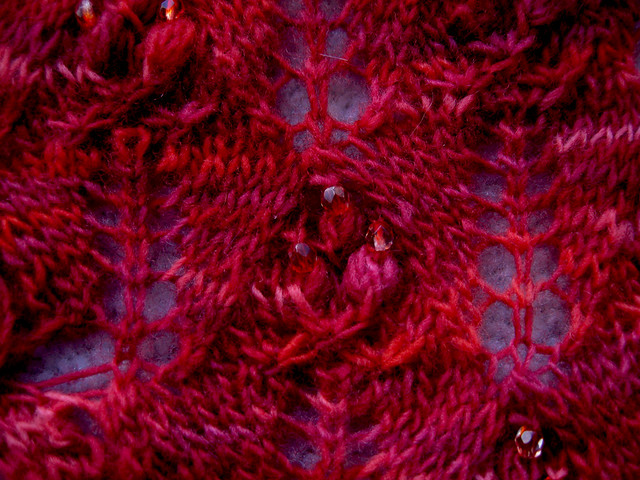
Krokus is being knitted with Malabrigo laceweight in the Amoroso colorway. The beads are 4mm bi-color faceted rounds.


Both patterns are freebies and lots of fun to knit--there's little repetition, so boredom cannot set in.

In other news, I decided to discontinue my spinning series--few of my readers seem interested, so I will forgo publishing the rest of the articles that apparently bored my readership into a stupor. Anybody still there?

Sunday, December 5, 2010

Spinning for Lace, Part 3: Fiber

After some high-powered nudging from an assortment of readers, I've finally gotten around to writing the third in a series of blog posts about spinning lace yarns.

Let's start by defining lace yarn so we know what we are talking about. Just as there's no standard sweater yarn, there's no standard lace yarn--you can knit lace out of hawser line if you have Really Large needles and a good-sized backyard. But conventionally, lace yarn is that which is finer than fingering weight--in the area of 10,000 meters per kilo--about 5,000 yards per pound. The finest handspun I've seen was made by beadlizard: 171,360 meters per kilo (85,000 yards per pound), useful to people with the eyes of a hawk, the patience of Mother Theresa, and the mindset of, well, words fail me.

Bear in mind that the thinnest yarn you can spin is comprised of three fibers. Yarns of this grist were used, three-plied, for Shetland lace.

There are some spinners on Ravelry who aspire to such wispy (and fragile) yarns, and several who have accomplished this impressive feat. I confess to have spent a week making about 100 meters of this stuff out of Optim merino, which was carefully plied on a charkha, wound off into a tiny ball, and reverently placed in a drawer so I can admire it periodically. I have no compelling drive to knit with it anytime soon. I estimate the plied yarn to be about 37,000 yards per pound--about a 150/2 grist.


I am frequently asked what sort of fiber is best for spinning fine lace yarns, and will answer the question this way: There's no Best Fiber, because the ability to spin fine grist is all about fiber preparation.

If the batt or roving is immaculate, my hands will be spinning away as I read a book. Perfectly prepared fiber draws so evenly that, with a bit of practice, you shouldn't have to do more than glance at it once in a while. Clearly, producing an even yarn is just a matter of rhythm. Your hands will be repeating the same steps over and over--draft out a length, twist, and wind on. If the fiber prep is flawless, the rest of you can be doing some thing else--a pleasant application of multi-tasking that's well worth mastering.

If the fiber is less than optimal, I will put it away and use it for another purpose. If there's one thing I have learned, it's that raw material will always dictate what it wants to be. And some of the batts and roving I have bought insist they want to be sock yarn. Or hat yarn. And in one sad unspinnable case, the only thing that fiber wanted to be was stuffing. And so it was.

Here is an example of a lovely, smooth batt eminently suitable for fine lace spinning (the dark pink dot is dye, not a fuzzball):


And here is one that is not:


The nepps (little wads of short fibers or snarls) are circled. You can, of course, hold the batt up the the light and daintily tweeze them out. Not being that energetic, I spun that particular batt (merino, silk, and angora) in a heavier weight yarn and thus avoided all the delicate plucking and concomitant mumbling, and whining.

It's often difficult to tell if a batt is really smooth by inspecting the prettily wrapped or folded fiber you see on the Internet. You can ask the artist to take a picture of the batt with light behind it--most sellers will be happy to show off their carding prowess.

Roving, because it's machine-made, tends to be more uniform than batts. However, if you are buying dyed roving, you need to make sure that the stuff wasn't felted or over-handled by the dyer. A good close-up picture will give you good idea of spinability, but no guarantee.

I almost never get lumps in my yarn, probably because I learned long draw, my preferred spinning technique, from a master spinner in New England 40 years ago. Lumps mean your fiber prep was not perfect and/or the twist is running into the fiber too quickly. You will also get lumps if your fiber is sticky. Some fibers are naturally sticky; others may have too much lanolin and just require a good wash to make them easily slip by each other. Adding silk to a fiber mix dilutes the natural tendency of wool fibers to cling to one another. But too much silk makes for a non-elastic yarn and I like my yarns to be springy.

Because I really hate it when people talk in generalities, I will give a few sources for superior fiber that work especially well with long-draw and supported spindling and have produced, for me, exceptionally wonderful lace yarn.

1. Dragonfly Fibers 65/35 merino silk top. Utterly flawless mixture that's a bit springy, a bit shiny, and altogether perfect for fine drafting.


2. Ever Improving Me Batts. Her batts are scary. There's not a tangle or nepp to be found. Fluffy and perfectly blended, they set a standard for carding fibers for lace. She has also mastered the rare ability to evenly blend in sparkle. Make sure you order smooth batts, though. She also offers art batts--lovely, but not so good for fine yarn. Sorry I don't have a close-up of a batt--I've spun everything I bought from her. No leftovers.


3. Adventures in Fiber Batts: Just as frightening as Every Improving Me products, these batts often feature gorgeous color gradations, which keep me from getting bored with a single color.


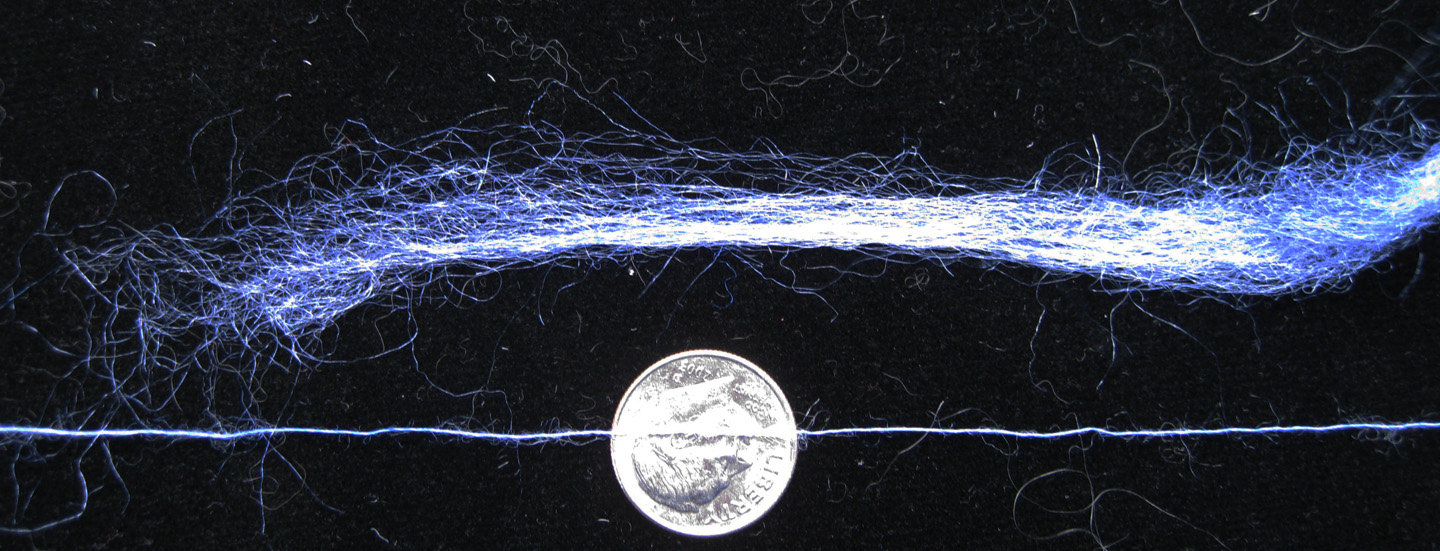
4. Optim Top. Optim is a fine merino (19 micron) that has been mechanically stretched to a finer fiber diameter (14 microns) and chemically fixed to prevent bounce-back (14 microns is a typical diameter for cashmere fiber). Optim is silky, lightweight, and and very strong. The three-fiber yarn I showed above was spun with Optim; the picture below is heavier--about 30,000 yards per pound. It's a bit difficult to dye--it resists wetting out and floats around on top of the water for hours. If you don't want to spin white fiber, weight it and then soak it overnight before trying to dye it.


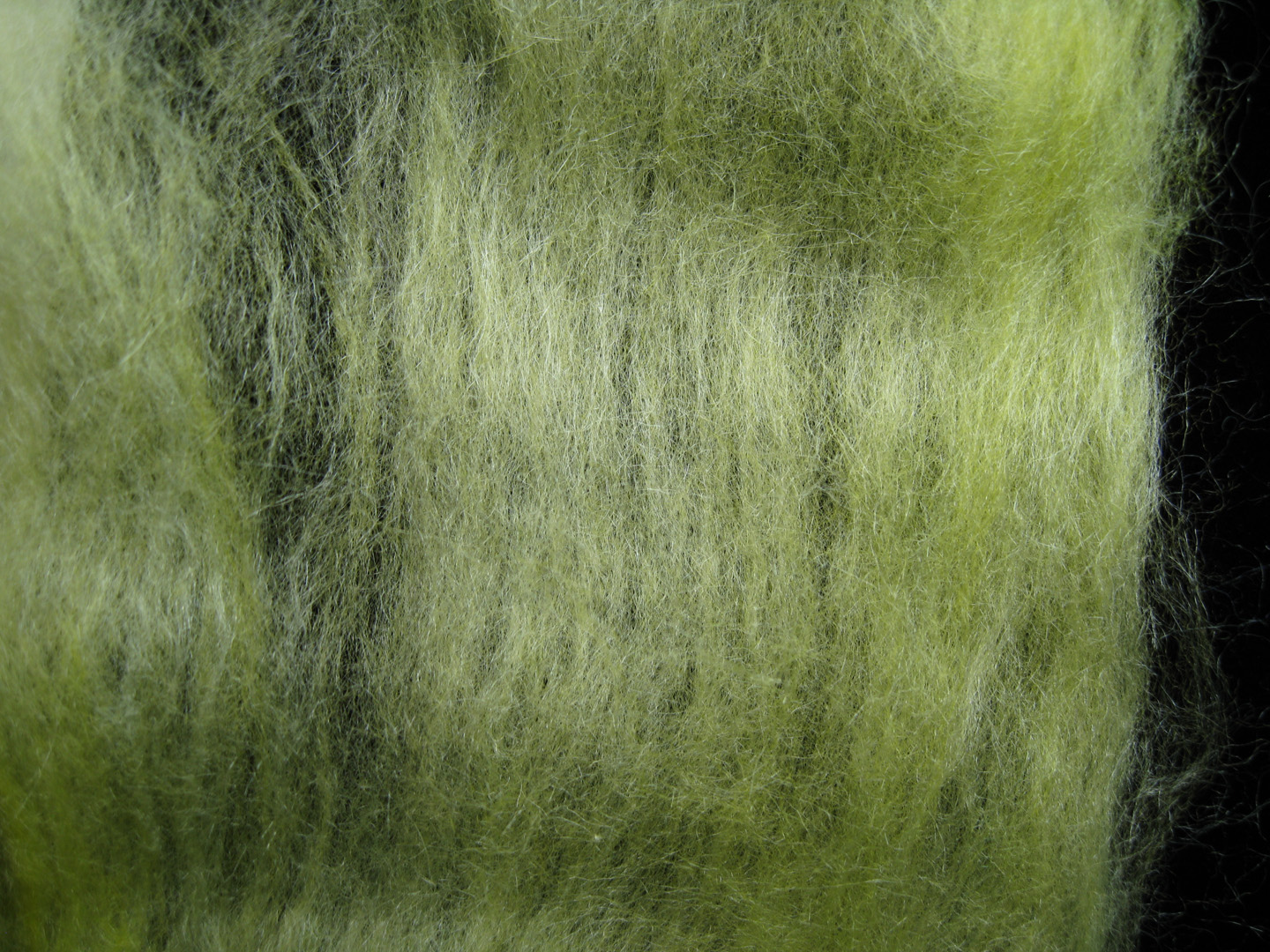
5. Corgi Hill Roving: Heart-melting colors in all sorts of fiber. I am particularly fond of her angora/merino and the wonderful merino/silk blend shown here:


If you take a peek at my Ravelry stash, you'll see that I am helplessly in love with her batts, as well. However, the fibers are sometimes not uniformly blended, which makes it a bit difficult to spin uniform frog hair. For heavier lace yarn, though, you can't go wrong with her carded preps.

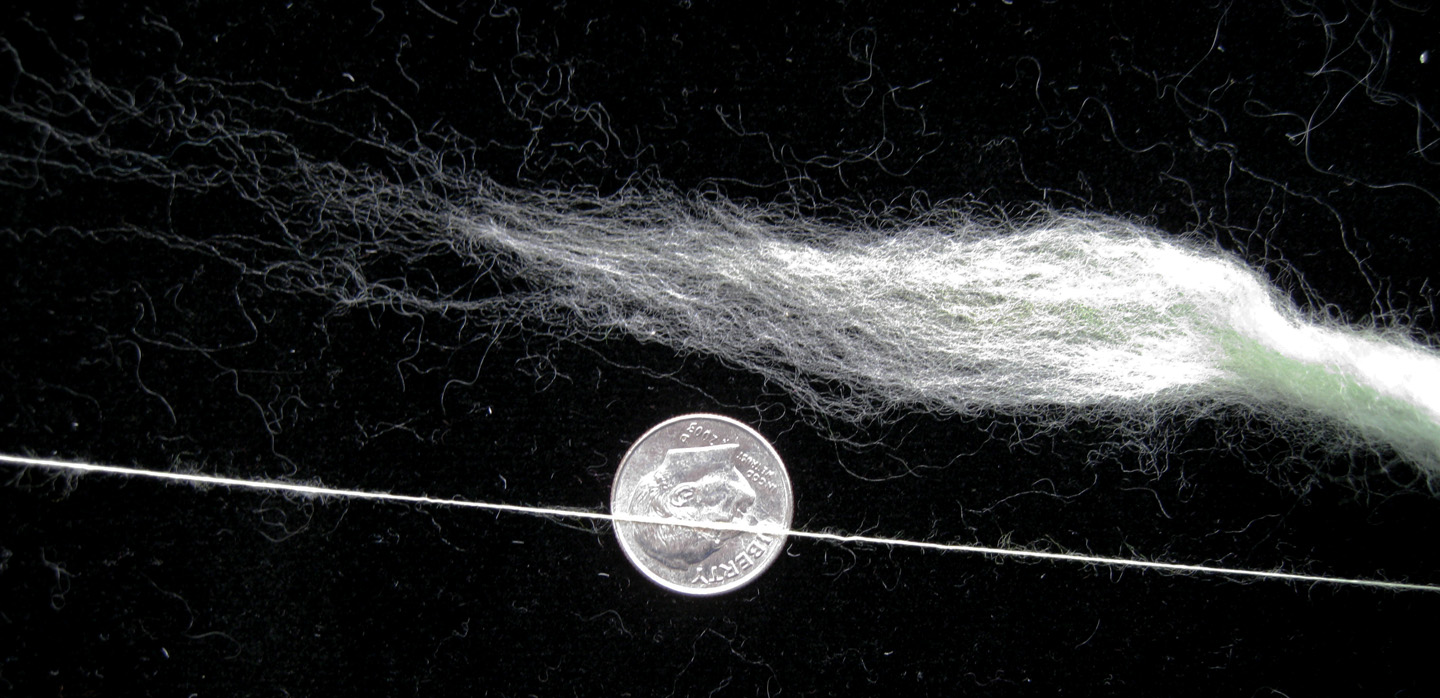
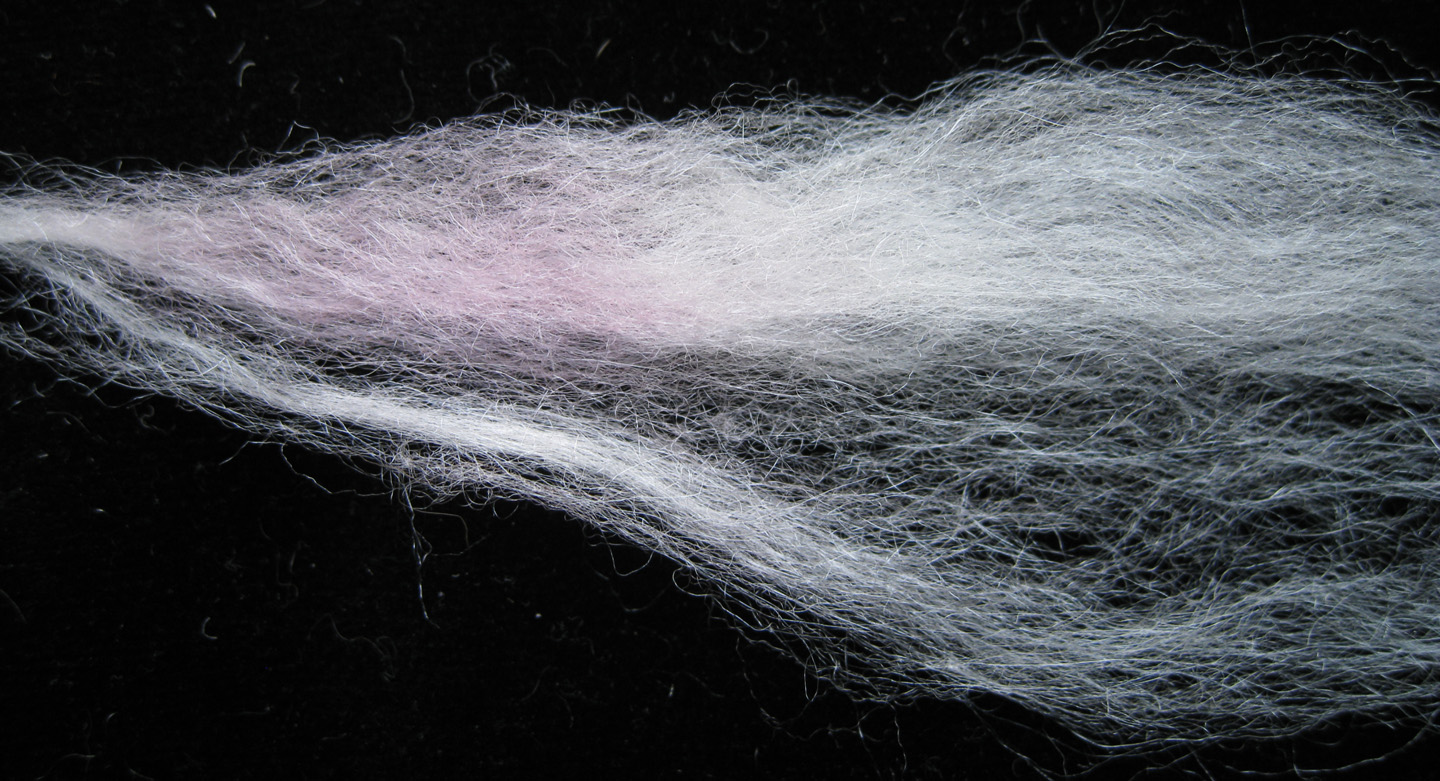
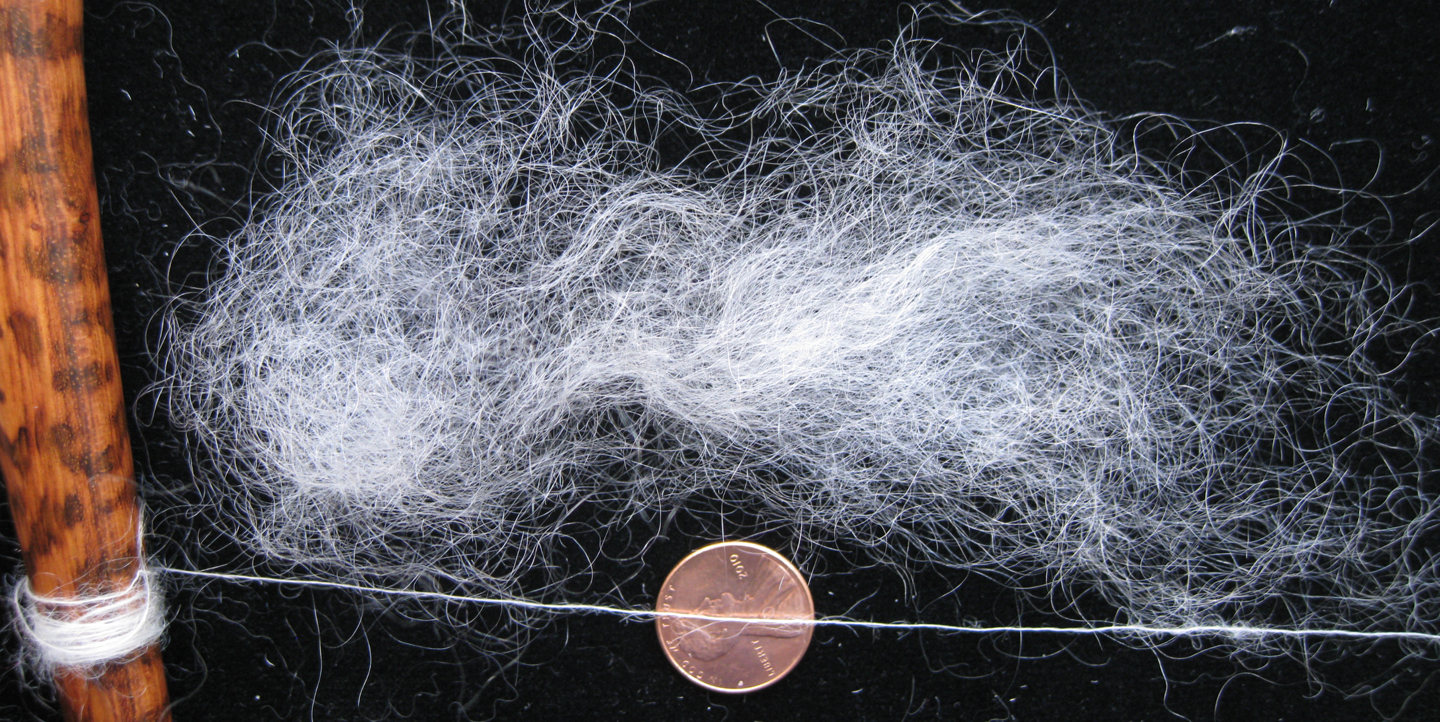
It's certainly possible to spin from a loose cloud of fibers--just be certain that the cloud is uniform and doesn't contain bits of short second cuts. For example, here's a lovely sample of Rainbow Farms Pygora goat fiber spun on a Gripping Yarn Snakewood Russian spindle:


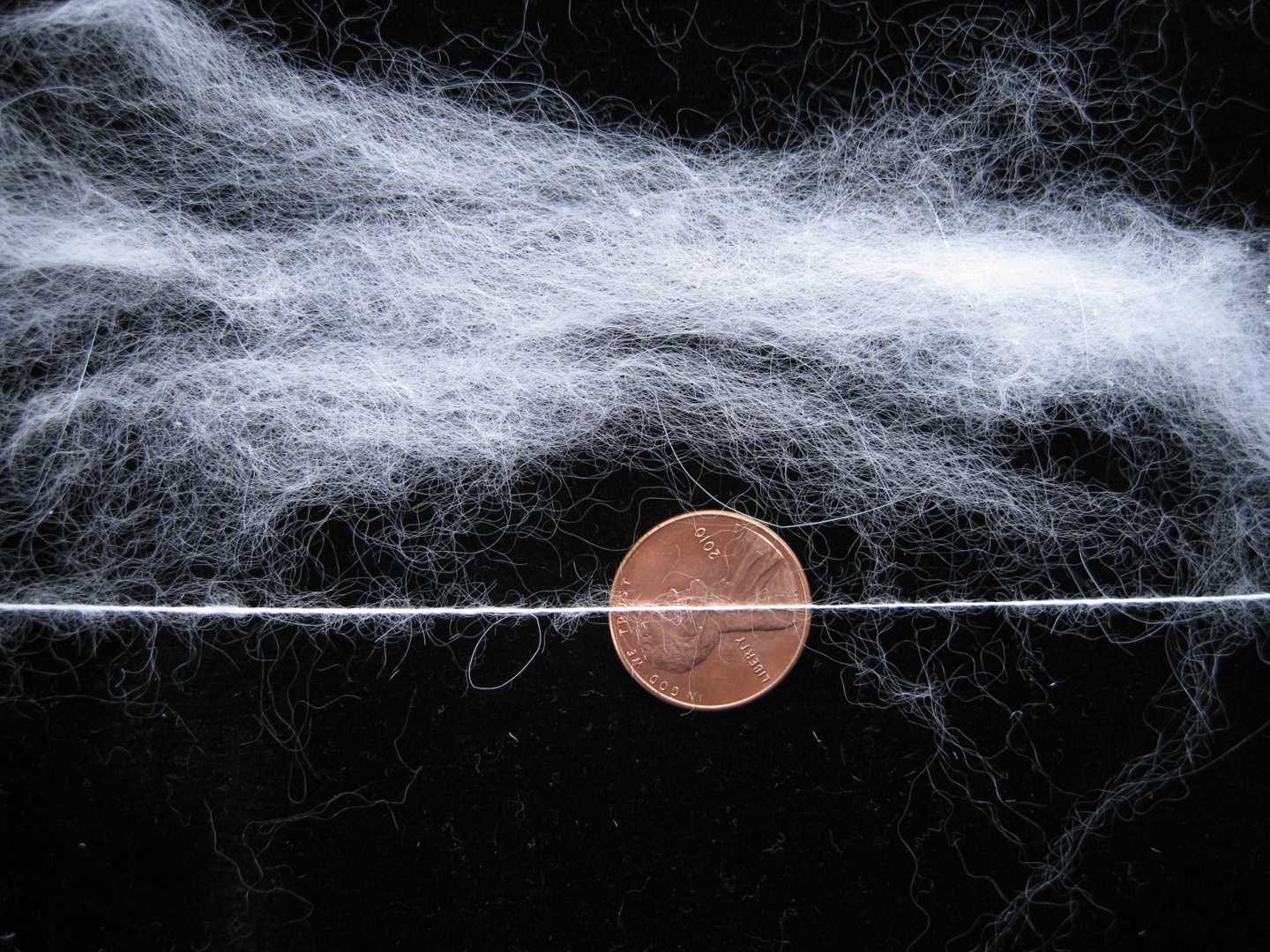
And a bit of Rambo's prime German angora, spun on a Russian supported spindle.


Finally, there are vegetable fibers, such as cotton, that can be spun very fine. I don't care to knit with it, so I don't have anything much to say about it. Bamboo and similarly processed plants are just rayon. Some people love the stuff, but I don't care to spin it or knit it either. There are several Etsy artists whose color sense makes me swoon, but they add bamboo to everything. About the kindest thing I can say about bamboo fiber is that it's shiny and cheaper than silk.

The next post in the series will probably cover charkha spinning. Or not! Stay tuned!