Wednesday, July 11, 2012

A Billion Beads, Redux

Harry returned home a few weeks ago from his wild and wacky vacation at the Blur Bowling Ally in Tirana, Albania. If you click the link and watch the live webcam, look for his condo--a black box at about 1:00. Note the little stage at the top, where he entertained the bowlers with his newest gig--Gangsta Rap Noh, a tasteful blend of contemporary stylistic repartee and traditional Japanese dance. Frankly, I think a bowling alley is the perfect spot for his performance...the crash of falling pins is a lovely accompaniment to his, um, singing. 

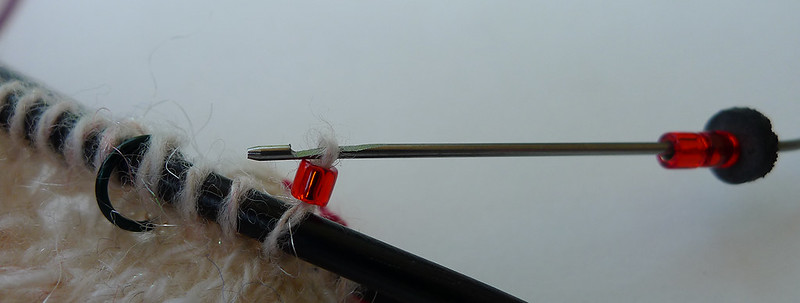
While he was resting, Harry spent his time working for my Etsy shop, The Gossamer Web. From a passing bowler, Harry managed to obtain some spring steel, a couple of files, and enough goat cheese to stock his pantry. The result: The Fleegle Beader, our answer to the crochet hook-floss threader-wire methods of adding beads to your knitting. (Sorry, Harry ate the goat cheese.)


After considerable debate, we decided to name it The Fleegle Beader, because I pointed out that The Harry Beader sounded ridiculous. However, Harry does star, along with other members of his extensive family, in the Ravelry ad. It took most of the day to get everyone lined up on the supersized beader handle, but we thought the ad turned out pretty well.


These beaders are available in two sizes.

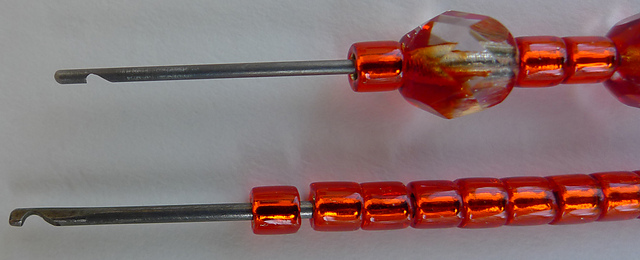
The 0.8mm size is for designed #8 and #11 seed beads. It will hold about 60 #8 or 90 #11 beads. The picture below shows a mixture of #8 and 6mm faceted Czech glass beads with teeny, tiny holes. I like to use these beads as nupp replacements.

The 1.0mm size is designed for #6 or #8 beads with large holes, such as Delicas. It will hold about 60 #8 Delicas--my favorite bead for knitting.


The tip has a hook that will work with yarn as thick as heavy fingering weight.


The bottom of the beader is bent so you can use it with a bead spinner. Comes with a tip protector and two stoppers for the bottom, because you might lose one and I don't want you to be unhappy.


Wednesday, June 6, 2012

Bear with Me...

Life Lesson # 4545: Beware of anyone bearing a large, orange Home Depot pail and a really big grin. Although he ostensibly went for a walk in the woods, somehow Roy returned home with about two pounds of, um, grizzly bear fur.

His story (verbatim):

I was walking in the forest, when all of a sudden, a huge, ferocious, mean, nasty, scary grizzly bear leapt out of the trees, intent on stealing my fruit bar. We wrestled for a while, and after a few right hooks and an uppercut to his snout, I forced him onto the ground and held him down in a hammerlock. Knowing how much you love exotic fiber, I whipped out my trusty comb, ran it through his/her pelt, and collected the fur in this handy orange pail that I always take camping, because you never know when you'll need one.

The real story, needless to say, revolved around the nearby bear park, a kind manager, and the same orange pail...

Never having gotten close enough to a bear to run my fingers through its fur, I was prepared for just about anything. My sense, from looking at bears from a respectfully healthy distance, is that the fur would be rather coarse. And I was right.


Not surprisingly, bears shed in the summer months. The fur is a mixture of long hairs and a reasonably soft undercoat. We washed it gently in a bit of detergent, the rinsed it and let it dry in a mesh bag overnight.

 Raw grizzly bear fiber

 I spent an hour with a fine-toothed comb and removed the outer hairs, leaving a handful of springy short fur that felt quite like Shetland wool. And like wool, bear fur is well lubricated, containing a healthy amount of, um, bear oil?

Dehaired grizzly bear fiber


I didn't think that spinning the undiluted fur would be rewarding, so I grabbed a bit of merino/silk, and carded it with the bear fiber. The ratio was about 30% grizzly, 70% merino/silk.

Grizzly bear fiber carded with merino/silk

Grizzly bear fiber and merino/silk rolag

Then I grabbed a Tibetan supported spindle and spun it into a single, two plies of which will make a fingering weight yarn.

   Grizzly bear fiber and merino/silk, spun on a supported spindle


This stuff is surprisingly pleasant to spin--springy and not the least bit slippery, thanks to the natural oils. It was easy to pluck out the remaining coarse hairs, producing a lively yarn which, while not luxuriously soft, would make interesting outerwear. And Roy, after his death-defying escapade, certainly deserves an ear warmer made from handspun merino/silk/grizzly bear.

The fur was donated by Mikie, a Rocky Mountain Grizzy, ten feet tall, weighing in at a svelte 1000 pounds. Mikie's day job is acting; he starred in Budwiser commercials in 1997 and 1998. No, I don't know what he was doing with the beer. Probably eating the cans whole.


Sunday, May 27, 2012

A Billion More Beads...

A while back, I wrote a post about making a more efficient beading crochet hook by gently applying a Dremel to the shaft of a crochet hook:


I was happier with the edited hook...but not ecstatic....6000 divided by 12 beads per load is (scribble scribble) 500 bead loads. The hook is heavy, so it can't be parked on the knitting itself. Worse, the only place to put it while knitting non-beaded stitches is in my mouth (tastes, um, beady?) or on the table (rolls around, beads slide off the hook). It was a better solution than a regular crochet hook, but not the ultimate one.

With my usual impeccable sense of timing, I started thinking seriously about more efficient beading methods after finishing the capelet. I have gathered here all the tools and techniques I could find, and present you with the options, complete with photos and snarky pithy commentary.

Crochet Hook
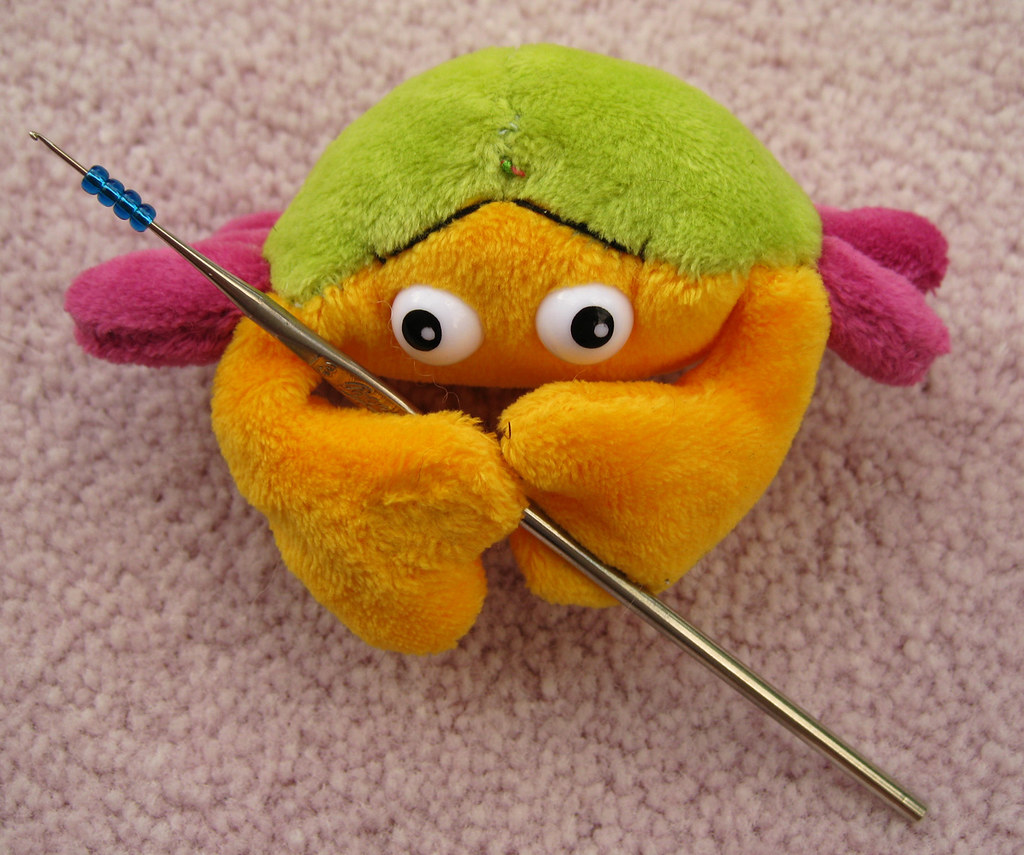
The tiny crochet hook is probably the most common method of adding beads to your knitting. You put a bead on the hook, snag the stitch, and pop on the bead:


An ordinary crochet hook can hold about four or five beads, which means you have to reload fairly often. Sanding down the shaft can increase your, um, bead magazine to about a dozen or so, but for something like the capelet, the crochet hook is wildly inefficient.

Also, the nature of a hook means that it's a bit bulky, so you have to use a tiny size (US #11-14 or so) to ensure that the hook can fit through the bead hole. A miniscule hook can often present an unhappy experience with heavier laceweight yarn by grabbing part of the yarn, separating plies, and can also inadvertently break fibers.

Crochet hooks are easy to find, though, and you can also use them to crochet and fish tiny objects out of crevices.

Dental Floss Threaders
The concept is excellent. There's a stiff end for threading and a foamy section on which the beads rest comfortably without sliding. You can string a lot of beads onto these and use the extras to floss your teeth or tie up tomato plants. Threaders are cheap and readily available at any store that carries dentalware.


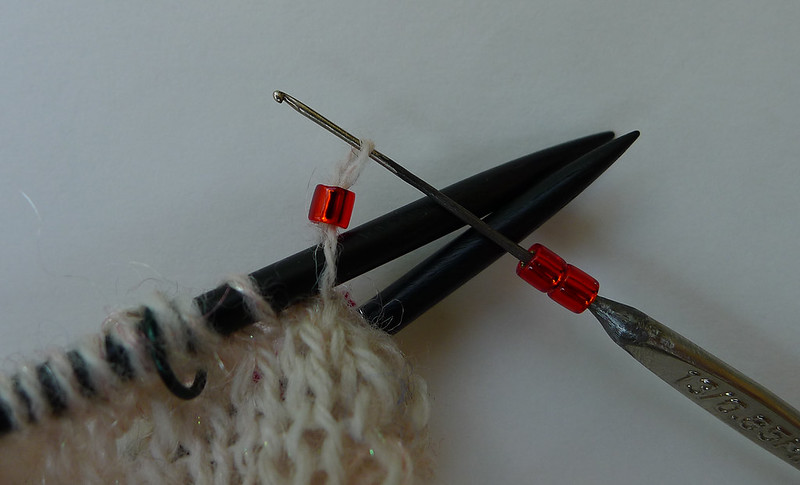
You insert the stiffened tip through the stitch, pinch the threader closed, and slide the bead over the tip and the yarn thusly:


I don't like using floss threaders, because the tip isn't very stiff, so pinching it closed feels awkward for me. Adding beads can be tedious, too, as it can't be used with a bead spinner. The tip is straight, so it can't be easily parked on the knitting.

On the plus side, threaders are lightweight and can be flopped over your arm or around your glasses.Or you can floss and leave it between your teeth until you reach another beading stitch. Your dentist will be so proud of your sparkly clean molars!

Beading Wire
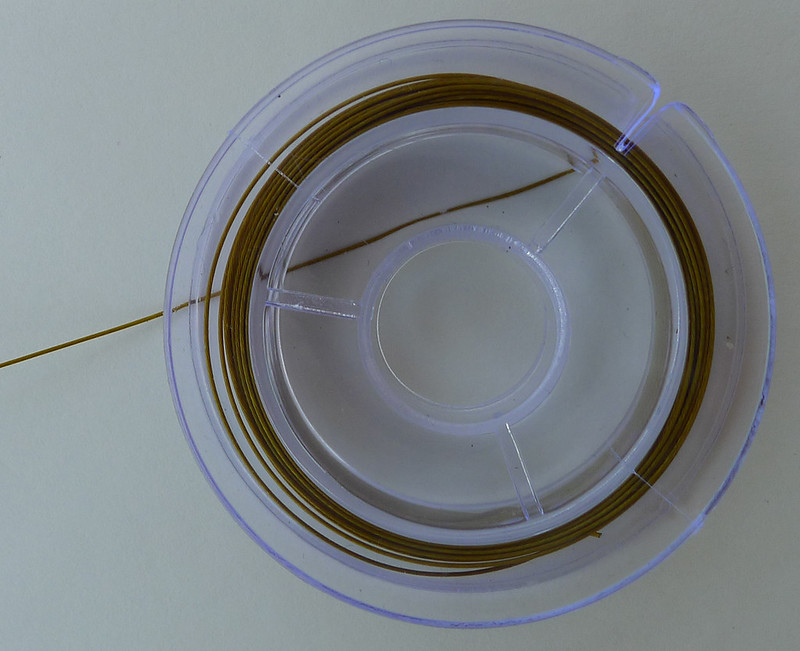
I read about this technique on Melissa Lemon's blog (she's the Nouveau Capelet designer). It's the same concept as the floss threader, but uses nylon-coated, .015″/.38mm Tiger Tail, which is a flexible, braided stainless steel, nylon-coated wire. It's very cheap and available in almost every bead store.


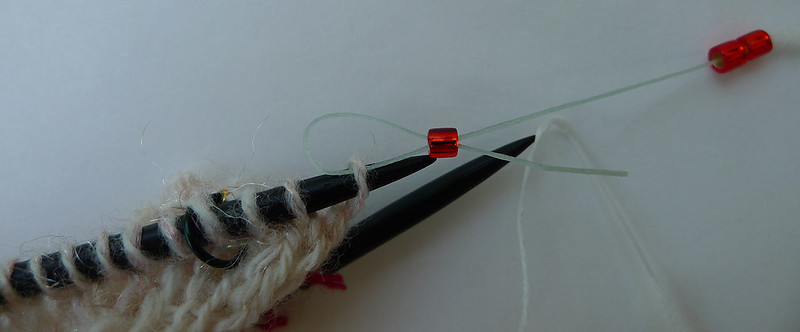
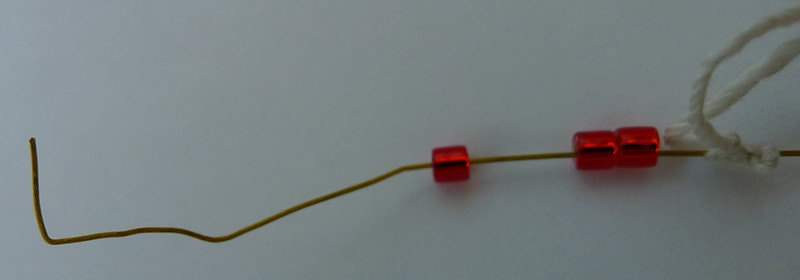
Just cut the wire to the desired length and tie a bead on the non-working end or make a knot to prevent the beads from sliding off. Then make a hook on the working end by folding about a inch of the wire back on itself.


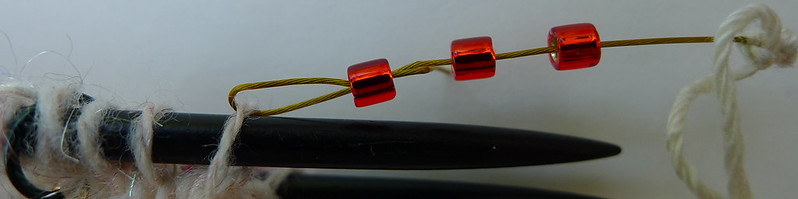
To use the wire, hook the folded section into the stitch, pinch it together with the main section, and slide the bead onto the stitch:


Beading wire is lightweight and has a hook section that can be parked directly on your knitting. You can thread a zillion beads onto the wire, although be warned, cats think a string of beads is a really fun thing to play with. It wiggles and makes a nice clicky sound when whapped with a paw.

On the downside, the wire isn't stiff enough to use with a bead spinner, and its flexibility makes it it difficult to pinch the hook. Any re-bends you make never straighten out, so eventually, you end up with a wiggly hook...
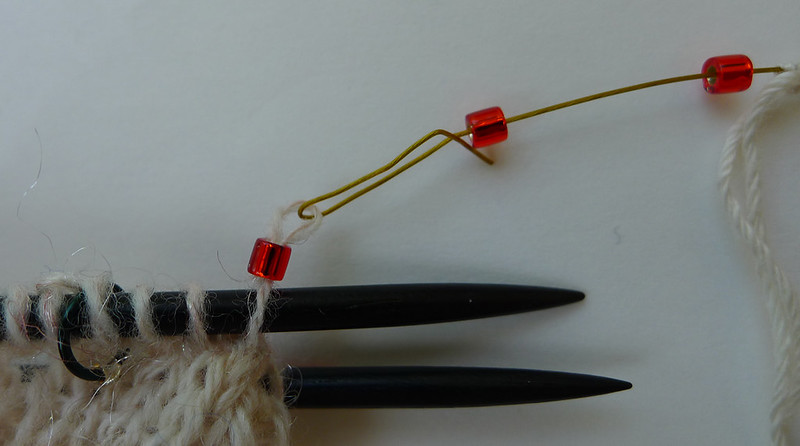


You can cut off the messy ends to make a clean fold, which eventually leads to a short piece of wire capable of holding a single bead...so you have to make another one.

Lacis Verna Beadle Needle

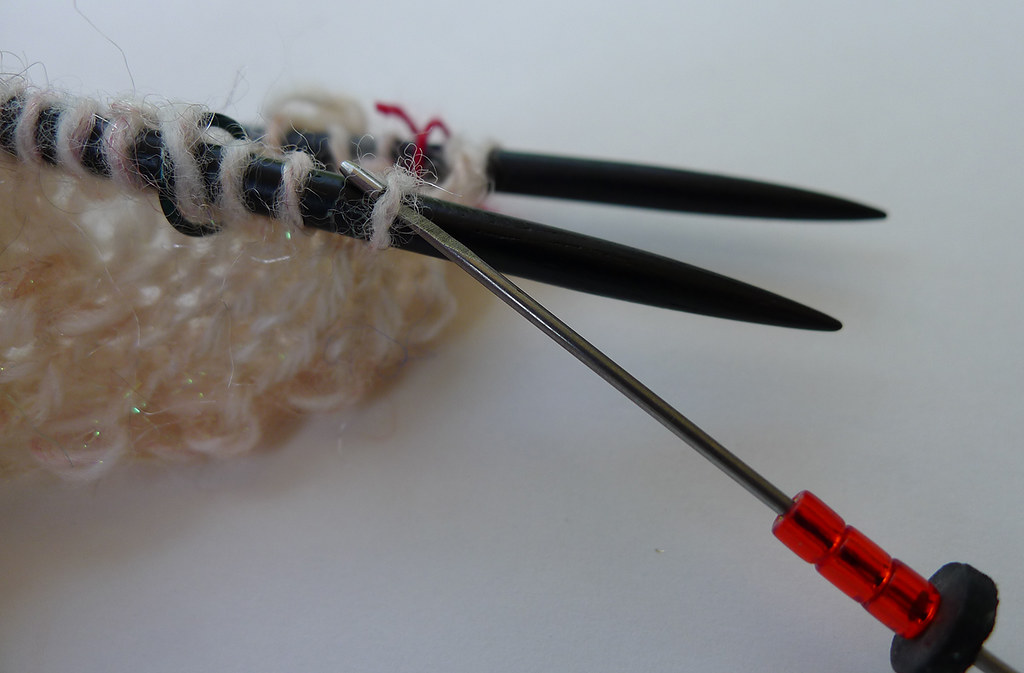
I saw this on Lacis's website and had to have one. The description made it sound like the ultimate, perfect, beaded knitting solution. The Beadle is billed as an eight-inch length of tempered steel with two rubber stoppers, a hook on one end, and a bent section on the other to allow it to be used with a bead spinner. There are several sizes; the one I purchased can hold about 100 beads:


Alas, the description is misleading. There's no hook. Instead, there's kind of a notch:


The notch on the first one I received was so shallow that the yarn just slid right off of it. I used a file to deepen the notch, which made it work well with cobweb weight, but heavier standard laceweight didn't catch in the notch. Jules kindly send me a replacement, which was a little better, but it tends to grab one ply of the yarn and shred it if I forced the issue.


My replacement lacked the bend at the other end for the bead spinner, but it was easy to make a gentle curve with my fingers. However, I found the Beadle too long to be comfortable, and it can only be parked on a table or in your mouth. You have to use the rubber stoppers to prevent the beads from sliding off both ends. No big deal, but the second thing I did after I unpacked the little guy was lose one of the stoppers. They are small, round, and black, so they cheerfully roll under refrigerators and/or hide invisibly in the shadows around your floorspace.

The beadle is also expensive--about $15 without Lacis's, um, handling fee. It's a clever idea and with a little work on the notch/hook, the Beadle could be a pleasantly viable beading solution.

Guitar Wire
I read about using guitar wire instead of a floss threader years ago, but the recommended wire was a size 30, which is actually a wrapped core. I tried using this, but the finer wire wrapping invariably started unwrapping...
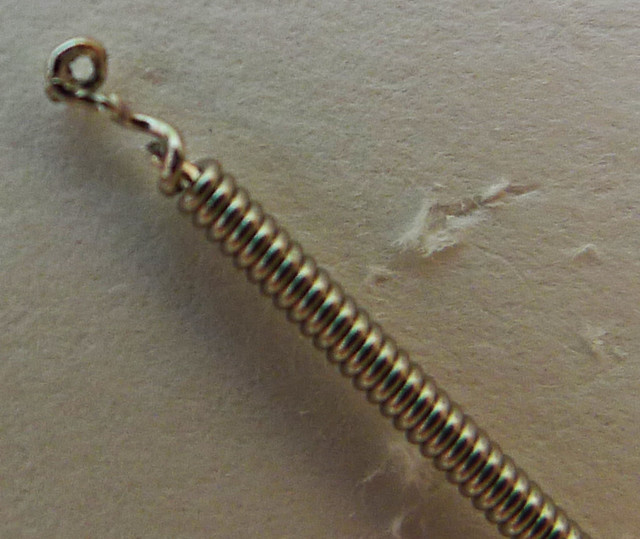


And it was too thick and and difficult to bend, at least for my beads and fingers.

Not to be discouraged, I revisited the guitar wire concept, and found that size 14, a thin, springy, wire, works much better for me. It's thin enough to accommodate every bead size, resilient enough to resist bending, pleasantly lightweight, and won't roll away.


 I cut off a comfortable section and used a bead spinner to whirl a bunch of beads onto the non-hook end. No need to make a bend in the wire--it's springy and conforms comfortably to the spinner bowl.


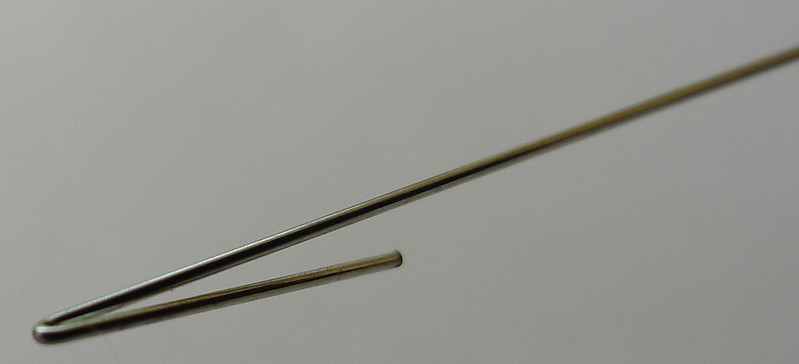
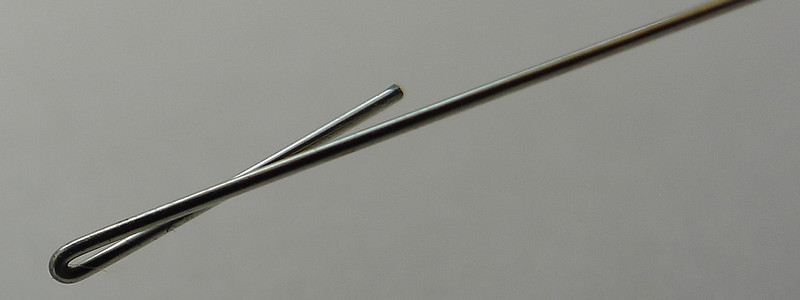
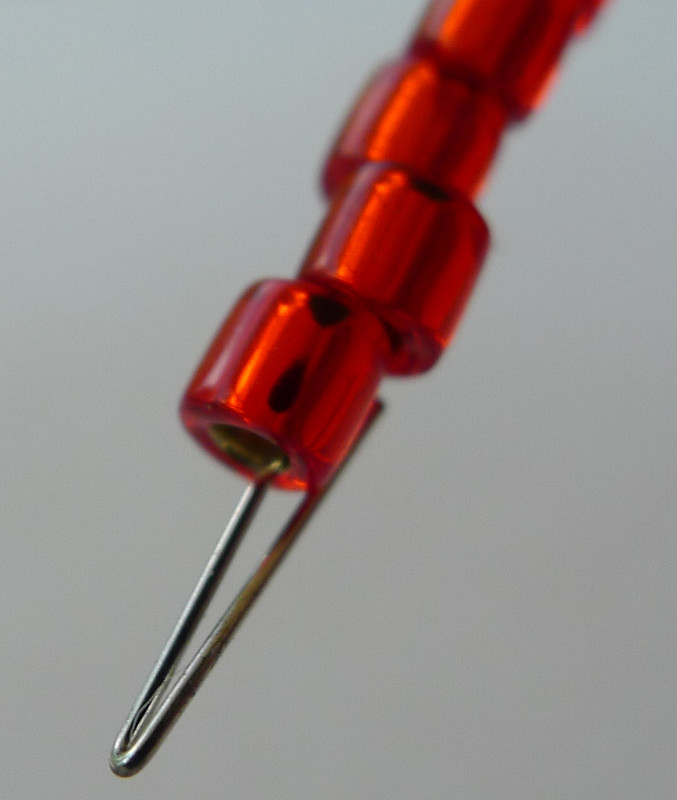
I took a pair of pliers and bent the end into a hook thusly:


Notice that the hook is bent quite far, but from the side, it's open enough to slide in the yarn:


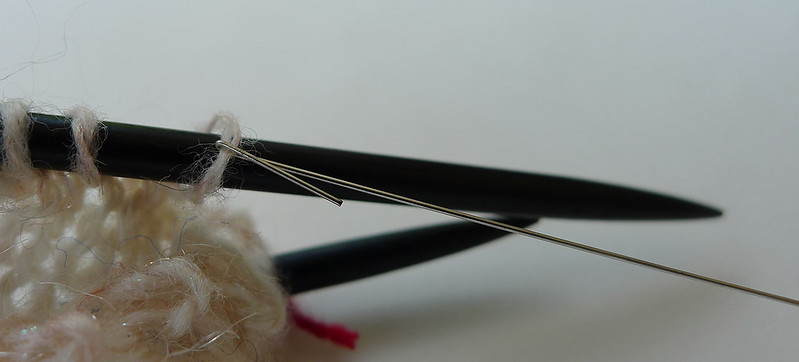
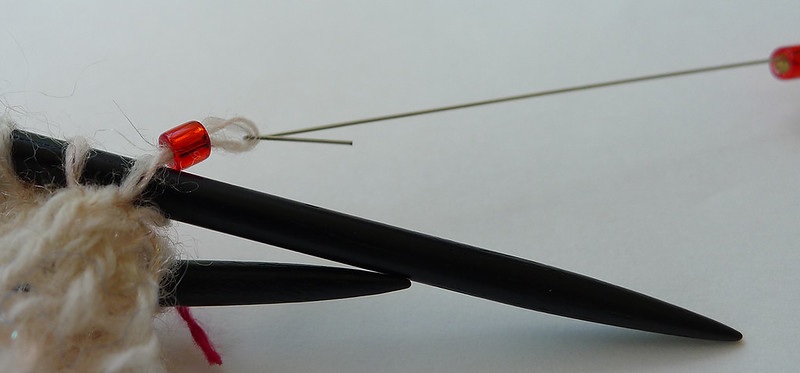
It's quite easy to close the gap by bending the main wire towards the hook--no need to pinch it closed. Furthermore, the guitar wire has several advantages over the other methods. First of all, like the beading wire, the guitar string can be hooked directly onto your knitting:


Because there's a slight bulge at the hook end, beads won't fall off that end:


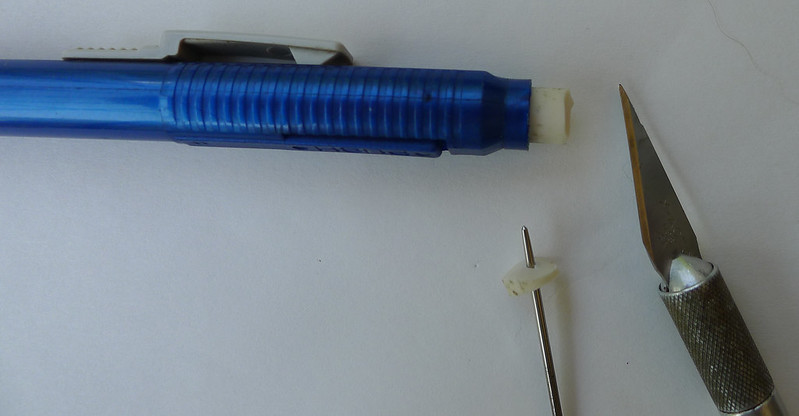
Making stoppers for the other end is simple. Use a sharp matte knife, cut a few slices from an eraser stick. Then poke a hole through each one with a thickish sewing needle and just slide it onto the wire:


Both the Beadle and this thing (the Fleeger? The Bleeger? The Bleegle? The FleegleBeadle? The Guitar-Wire-with-Hook-and-Stopper? ) store nicely in thick plastic straws.


.

Monday, April 9, 2012

A Billion Beads

Okay, so it was only 6000 beads, not counting the ones that dropped on the floor, zoomed into my toothpaste tube, and bounced their way into cracks too small to be seen with the naked eye. I also found two of them inside the Marriage Fern, eleven huddled in fright near the vacuum cleaner, and one adventurous little guy swimming around in my coffee cup.
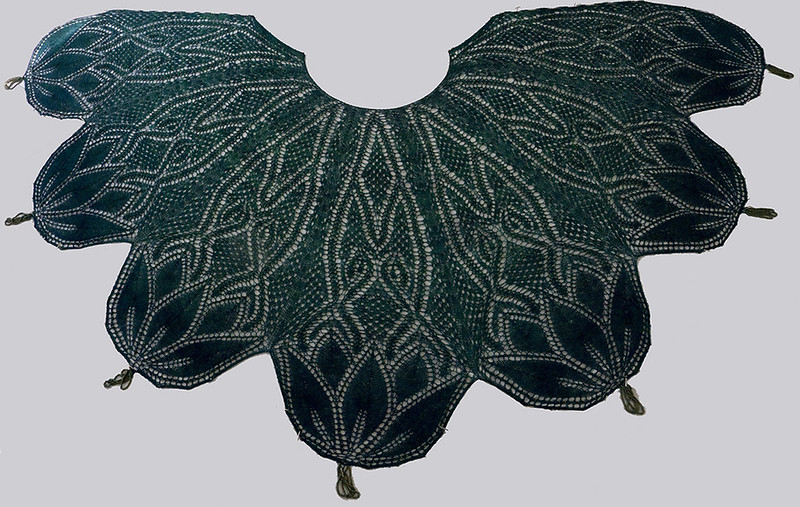
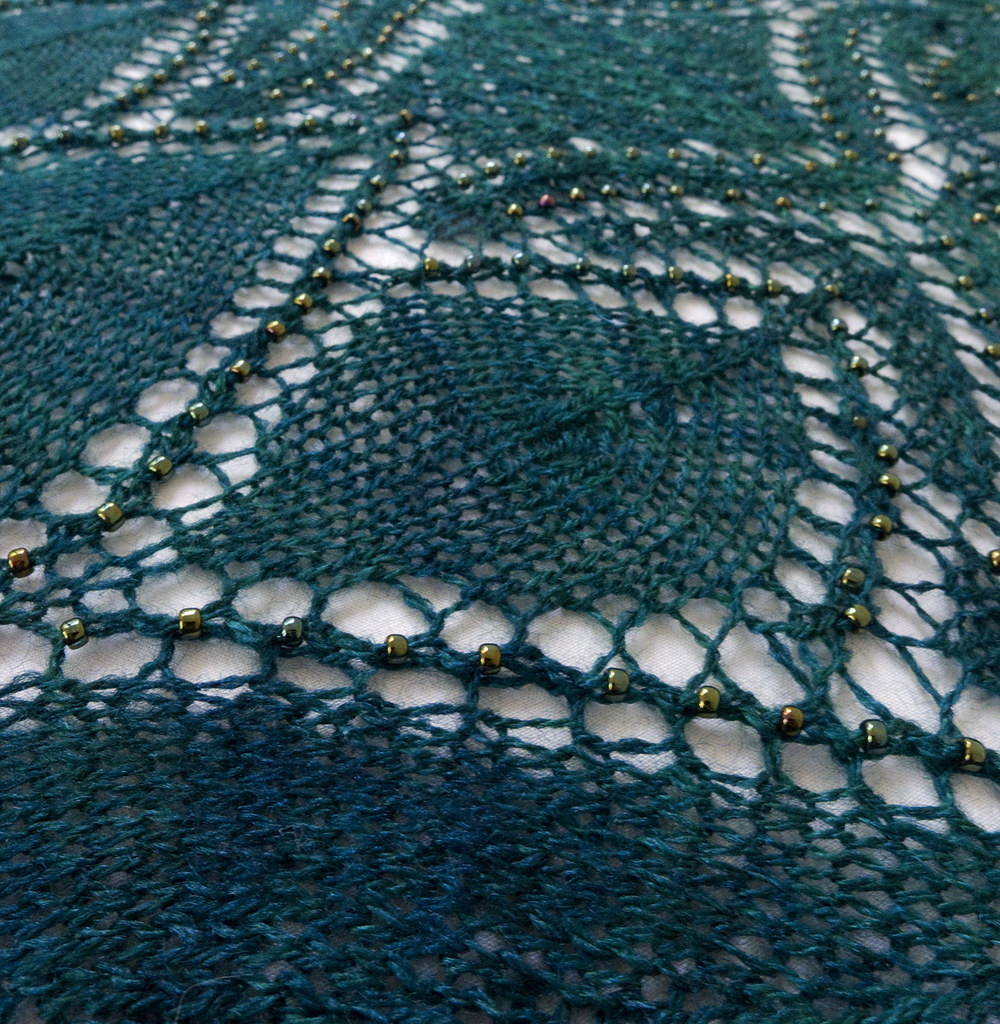
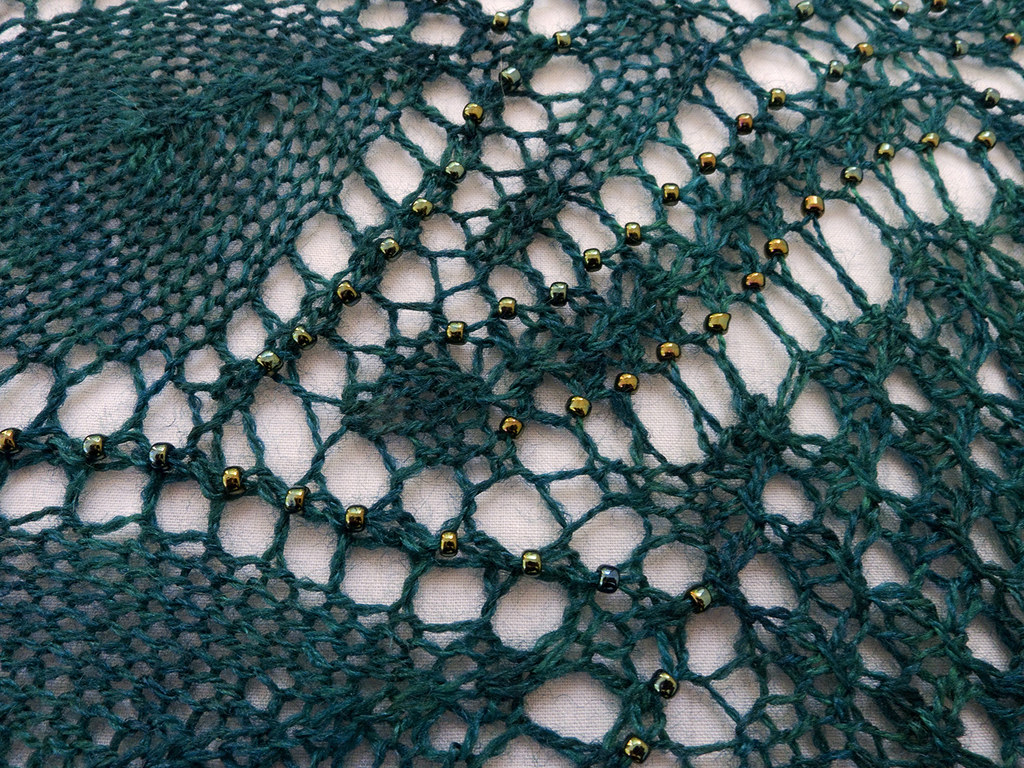
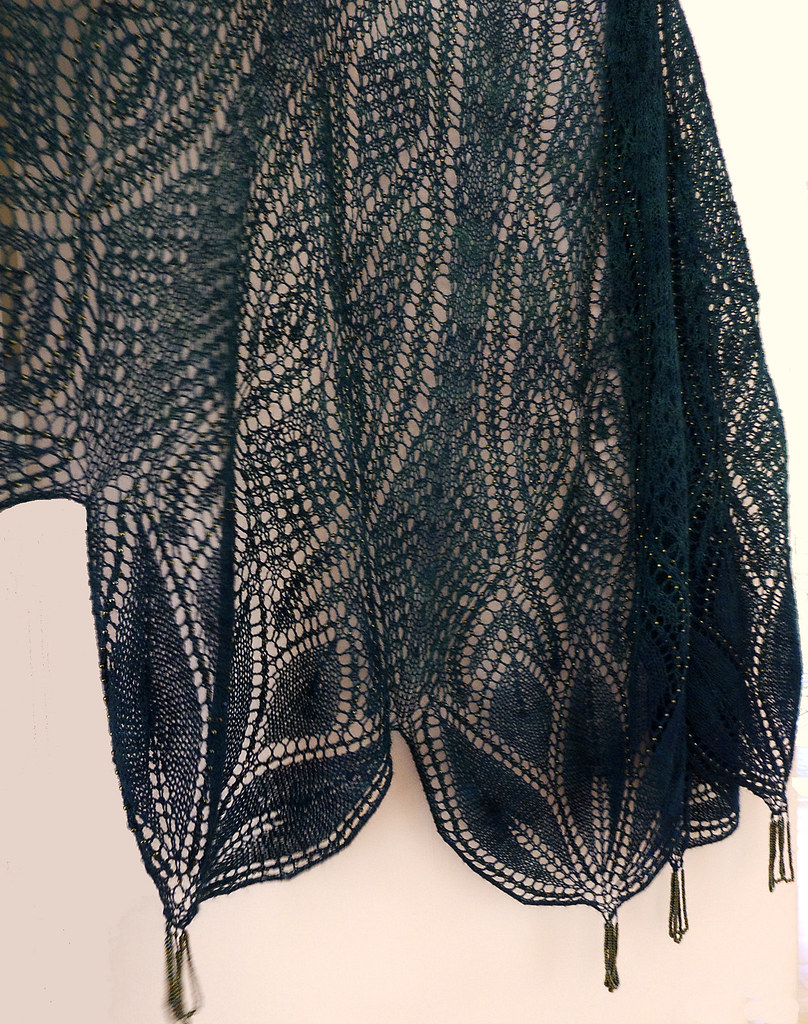
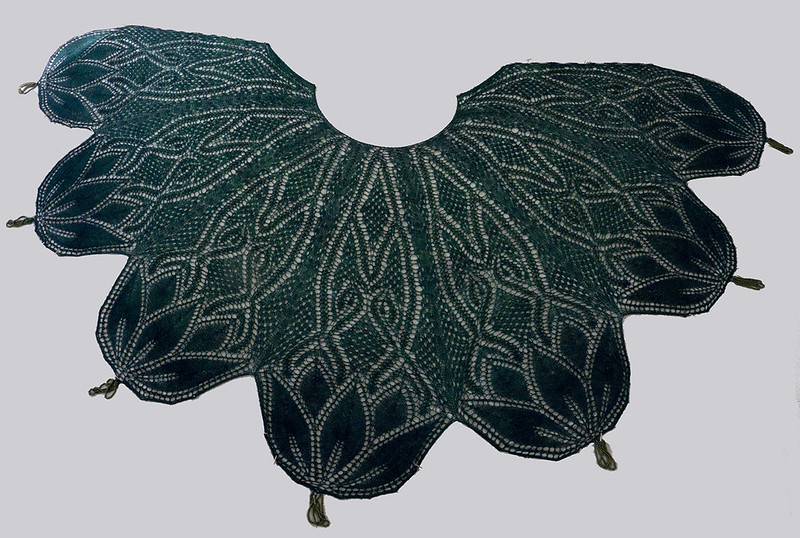
Disregarding the excessive beadiferousness this shawl entailed, the Nouveau Beaded Capelet  is a fabulous knit. The pattern is flawless, original, clever, and just plain stunning when completed, as you can see.


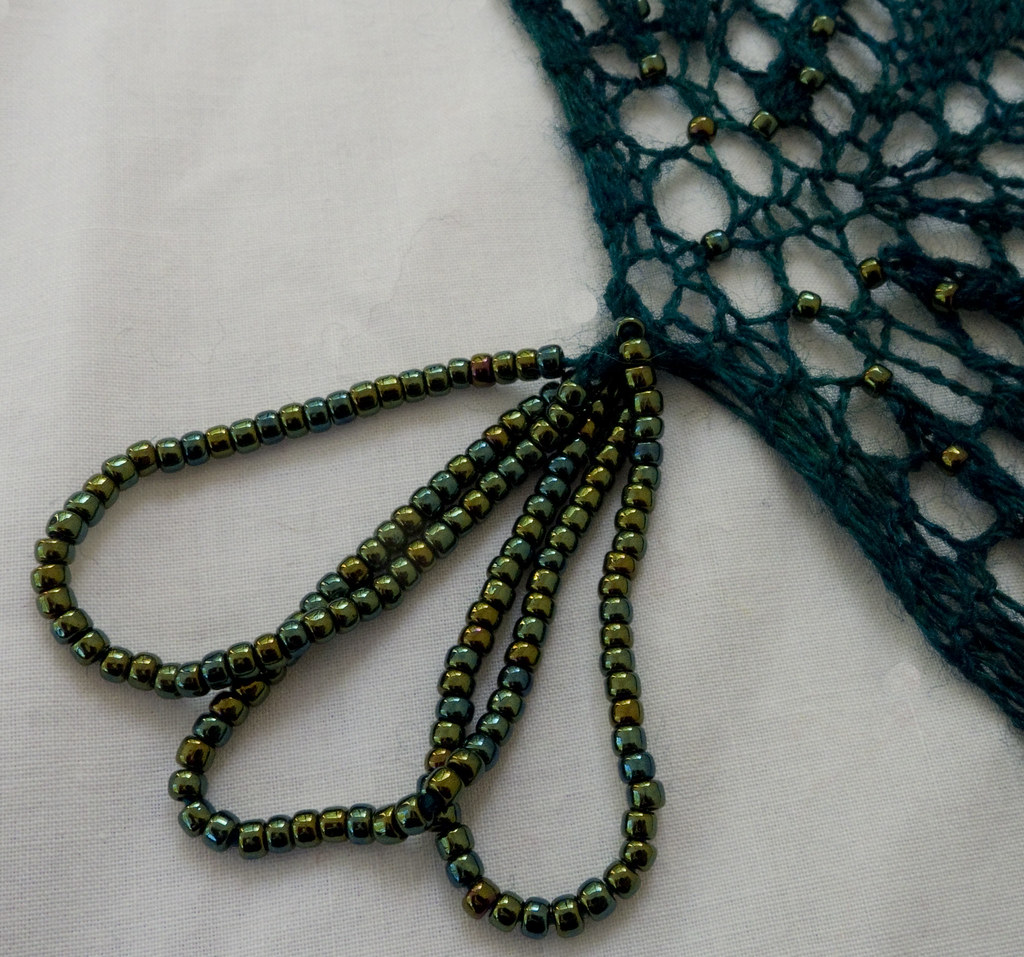
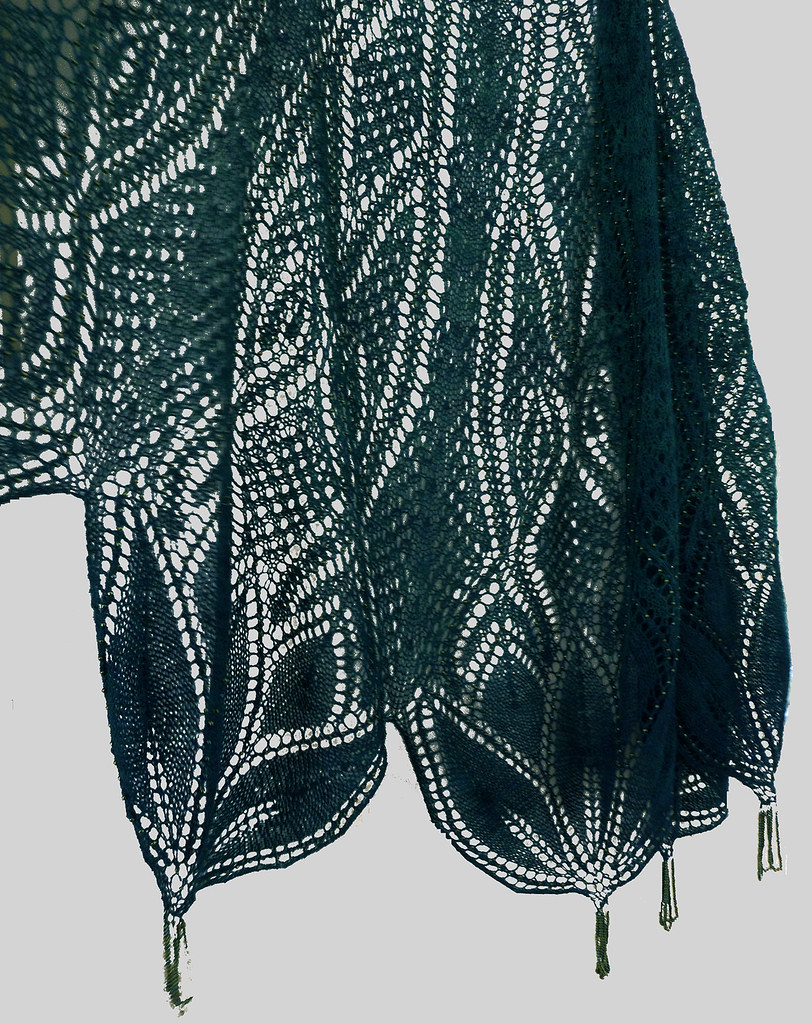
The shawl begins with a tassel on each of the seven scallops, which are knitted individually and then placed side by side on a long circular so the remainder of the shawl can be worked. Because the rows become shorter and shorter as you work towards the top, it never became boring; I had a difficult time putting it down to do other things.


Almost every yarnover has a bead, which creates graceful lines of glitter up the shawl.


The yarn, a green 50/50 merino/silk blend, will remain nameless. I found it in my stash and thought it would be perfect for this elegant project. I continued to think so, right up until I ran into the first of 14 knots in the 1250-yard skein. Worse, something--a cat perhaps--had clawed at parts of it, so there were lots of  sections that were fuzzy or sported a broken ply. By this time, I had finished the scallops, so I just gritted my teeth and Russian-joined every thirty yards or so. 

There were several further unpleasant surprises waiting at the finale though. The yarn was dyed in such a way that it produced hideous striping in dark and light green. The poor thing wasn't off the needles for ten minutes before it found itself floating in a pre-soak so I could overdye it. And--wait for it--the dyer hadn't bothered to fix the color, so her greens bled copiously into the presoak water. No amount of rinsing would remove the excess dye, which had the temerity to turn my fingernails green when I flipped the shawl over.

Gritting more teeth, I arranged the shawl in such a way that the scallops would soak in a dark turquoise dyebath for several hours, so the bottom of the shawl would be darker than the top. Then I flopped the upper section into the dyebath and cranked up the heat.

Aside from the fact that the color is now a pretty peacock green and the pattern itself is graceful, it feels incredible when worn--the weight of the beads makes it drape beautifully and it seems to be more a piece of jewelry than a garment.


I'm sure I'll be picking up beads for months, but the result is worth it.


Tuesday, March 13, 2012

Owlie

I love owls, so when I saw this cowl confection by Betsy Farquhar, I immediately plunked down $5 and dropped it into my queue. After studying the pattern, I realized that, as written, the pattern was large enough for me to use as a tube top. Besides being too wide, it was long enough to not only cover my neck, but would extend over the top of my head, as well. I live in Georgia and our winters are too mild for face masks. Besides, I would have to add eyeholes (too much work) and it was too memorable to use in a bank robbery.


A little pattern editing was in order. I reduced the number of owls from five to four and eliminated the chevron patterns above and below the main event. I found a pretty skein of peach and green Lisa Souza sock yarn and dyed half of it black.

When I had finished knitting the owls, I decided that the tube would make a lovely hat, should I not want to actually wear a cowl. Waving my magic knitting wand (patent pending), I worked a row of K2tog, K8, YO to make some holes, through which I threaded a tasseled cord after knitting a final inch and binding off.


No, I didn't make an i-cord. Instead, I tightly twisted eight strands together, folded the result in half, and knotted the ends, which produced a twisted cord in about one-tenth the time it would have taken me to knit an i-cord, assuming I could be compelled to do so (not in this lifetime).

The end result is a howl...tighten the cord and it's a hat; loosen the cord and it's a cowl. The concept, which I am sure is not my invention, is clever, requires almost no extra work, and can be adapted to any hat or cowl to produce a hybrid howl.


Friday, January 20, 2012

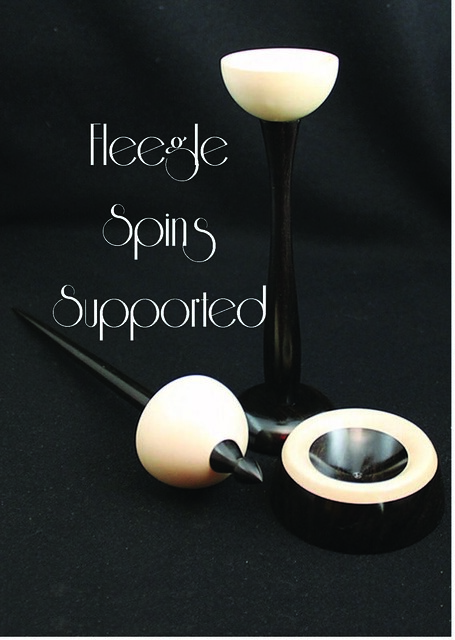
Fleegle Spins Supported--The Book!


From the back cover...

The greatest book ever written about supported spinning! Looks offstage. Yes. I know this is the only book ever written about supported spinning, but I have to write something for the back cover copy ...glances offstage again ...because the guy who printed the books told me blank covers look, well, suspicious. Turns toward the stage wing... I am not going to rant about that on the back cover... faces front... OK, so this book is just full to the brim with over 400 pages describing everything you need to know about spinning with a supported spindle. Included with the erudite, entertaining text and stunning photographs are 25 videos taken by total non-professionals who had some trouble figuring out which buttons to press on the camera, but all in all, we think they came out pretty well!

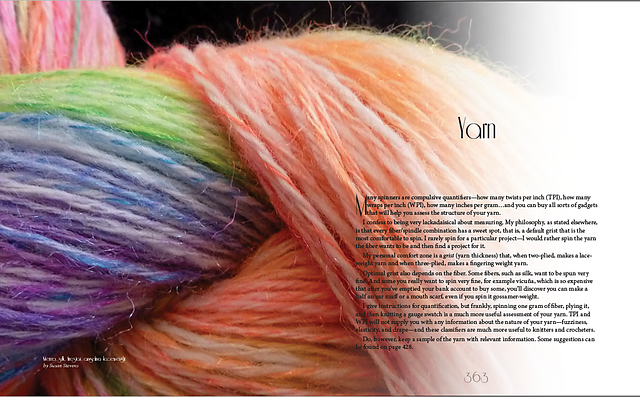
A few sample pages to whet your appetite...


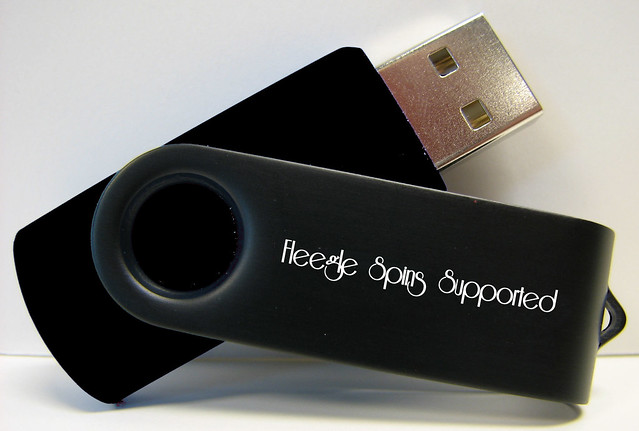
Probably the first-ever interactive PDF to ship on a flash drive! It might actually be the first, but we don't want to get sued, so we inserted a waffle word. Heh.


Interactive PDF with embedded video, shipped on a USB 2.0 flash drive 
400+ full-color pages, suitable for any computer or tablet
Requires Adobe Acrobat 9 or later to take advantage of the
interactive features and software capable of playing .MP4 video files


Click here to order the hardbound paper book. $100, plus shipping
SOLD OUT
A new printing might be available in 2013, depending on demand.
Please message me on Ravelry (fleegle) and we will add you to
the list for another printing.
400+ full-color pages, suitable for any coffee table
Includes the ebook flash drive version


Testimonials!
We couldn't find anyone to write glowing praise, mainly because the book was just published, so we made stuff up!


Alexander the Great would have said...
If I had had this book while I was facing Darius III of Persia, I might not have actually won the battle, because I would have been fiddling with fiber.

Cleopatra would have said...
I could have done some real damage to those asps with a pointy spindle.

Shakespeare would have said...
To spin or not to spin, that is the question. But after reading this book, I feel that spinning is the answer, not the question. Anne really liked the book, too.

Einstein would have said...
S-twist or Z-twist, it's all relative.

Feel free to submit your own testimonials and if they are as positive as the ones above, we'll use them! Just think, you get to replace Alexander the Great's or Einstein's verbiage with some of your own!